
Like many women readers, I first encountered Emily Brontë’s Wuthering Heights in junior high school. Primarily a book about selfish people doing hateful things to one another, its protagonists, Cathy and Heathcliff, fixate on each other to the point of selfish obsession. Much like Mary Shelly’s Frankenstein it has yet to receive a faithful adaptation, despite many releases.
Director Emerald Fennell’s version starring Margot Robbie will be released next month. Social media algorithms have decided that as a 30-year-old single woman, I am the target demographic, inundated with advertisements and articles about the movie. Robbie herself has made the case that this version is for my age group; however, I am skeptical that an adaptation whose marketing is strictly focused on sex would make it good for women of any age or anyone, really.
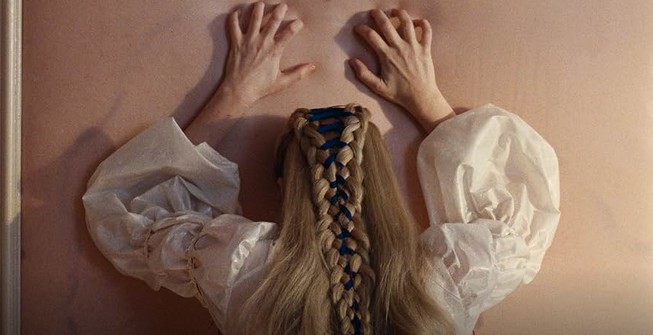
Layered with double entendre, the trailer shows a woman, wild-eyed, crawling toward someone on the floor, Robbie digging her nails into a flesh-colored wall, bodices being cut, corsets being tied, lots of sweaty skin, a finger inserted into a fish’s mouth, food being handled seductively, on and on it goes. Preliminary reports are that this content is tame compared to what was kept out of the trailer. My first thought when I saw it was “ick”; my second was, “I don’t remember any of that in the book.” Rather than producing a faithful adaptation of one of the most famous works of Gothic fiction, Robbie and Fennell seem intent on making it indistinguishable from a generic bodice ripper.
Robbie also noted this difference on ABC’s Jimmy Kimmel Live! when she promised that the movie would contain sex and “lots of kissing.” She herself noted that there is no kissing in the novel itself.
Perhaps its biggest departure is not gratuitous smut but its understanding of what Brontë’s novel attempts to communicate. The trailer calls it the “greatest love story of all time.” Wuthering Heights is often discussed as a love story. Is it? Brontë biographer Samantha Ellis in a recent Guardian piece argued that it is not, and that attempts to make it one are precisely what deviate most film adaptations from the novel.
While I think that Wuthering Heights is proof that the word “classic” is thrown around far too liberally, Brontë’s book does something more interesting than a generic bodice ripper. Her story begs the question, what is love? If we accept the traditional Christian understanding that to love is to will the good of the other, then no, Wuthering Heights isn’t a love story.
Brontë seems to recognize something that our culture has forgotten; there is a difference between love and lust, and we can lust, have sinful appetites, for things that are not sexual. Her novel powerfully depicts lust in all its forms. Heathcliff lusts for money and power, so much so that he schemes to take Cathy’s family home, abuses her family members, and forces her daughter into servitude. Wuthering Heights is ultimately a story about what happens when people choose to feed their lust, how it warps, distorts, and ultimately destroys them.
The marketing angle for the new film appears to glorify the feeding of one’s lust rather than subduing it.
Ellis speculates that Wuthering Heights is a book enjoyed particularly by young people because it puts forward a view of romance that only appeals to those who have yet to experience real love. Brontë herself died unmarried at age 30.
“Perhaps,” Ellis writes, “it’s not the greatest love story of all time, our time or any time, but it is the greatest story about what we think love is like when we haven’t experienced it.”
This new version then filled with much more explicit content, appeals to a subset of unmarried women in their 30s, who think this might be fun to experience, precisely because they mercifully haven’t experienced the perverse sexual behaviors displayed, and unfortunately, they also haven’t experienced the good that is marriage.
I am unmarried, but have had the blessing of growing up around many marriages that lasted decades, and the joy and partnership they provide looks more enticing to me. But we have encouraged women in their thirties to put off marriage, and whether or not they admit it, this has left them to fantasize that real fulfillment is a distant, brooding relationship with a man who kidnapped your daughter and forces her to marry his son. Yes, Heathcliff does that.
Perhaps the saddest demonstration of this point was Robbie going on Kimmel’s show to brag that her friends threw a bachelorette party for her character, with a theme she proclaimed as “Victorian slut.” That description made me cringe in vicarious embarrassment. In the same interview, she brags about how the demographic group of her fans has changed to young girls since she starred in Barbie. She describes her friends as “literally frothing at the mouth” while watching the movie, and they would have “eaten” her costar had he been there.
But for women in their thirties, the push to celebrate this kind of perversion is not a good. As Trent Horn of Catholic Answers points out, a lot has been said of men and our pornified culture. Women do view pornography, but because they are wired differently than men, many turn to a different medium for sexual fantasy, the bodice ripper. While people tend to make light of these novels, they are damaging, leading women into greater and greater sexual perversion. Women are triggered sexually in different ways than men, which is why these novels and now movies have a greater appeal to them.
Horn explains that women tend to like romance literature more than men because engaging with written literature allows them to personalize and build intimacy with the characters and story. Women need this for arousal. Similarly, the new Wuthering Heights is trading on the intimacy that already existed with a well-known novel that many women read as young girls. It then adds a new layer of sexuality to the known content.
Horn is right that the church needs to take this seriously, because women are affected by sexual sin just as deeply as men, and if we love them, we will want something better for them.
It’s a truly wounded culture that celebrates slutty bachelorette parties for fictional characters rather than real marriages that create and sustain flourishing families. It is a culture that will leave women sad and degraded. If we care about women, then we should treat the issue of sexualized literature with the seriousness that it deserves and encourage women to reject it in the same way that we encourage men to reject pornography. We should encourage them to feed their imaginations with films and literature that help them with their sanctification, and Robbie sticking her finger into the mouth of a fish doesn’t do that.
Fortunately, if you are looking for something to watch this Valentine’s Day, you have a wealth of movies to choose from. I highly recommend anything Jane Austen, The Princess Bride, and An Affair to Remember, all of which bless the imagination. And for my fellow 30-year-old singletons there is always Bridget Jones.




Comment by Thomas on February 3, 2026 at 7:31 pm
I read the reference to “Bridget Jones” certainly as a joke, because that film is certainly pornographic in disguise and promotes all sort of promiscuity and sexual aberrations. The leading character even has sodomy with a male lover, and they both joke about that. The new adaptation of “Wuthering Heights” might be morally wrong and unfaithful to the original novel, but I am almost sure isn`t so morally repulsive.
Comment by Wilson R. on February 4, 2026 at 2:18 pm
I don’t plan to see Wuthering Heights, but this piece feels as if it was written to address a bygone era–the height of the sexual revolution. The author writes as if nothing has changed since then.
And yet today, we read that the current generation of single young people is much less sexually active than those from the 70s, 80s and 90s. And in case the author hasn’t noticed, the sexual content of Wuthering Heights sounds like an anomaly. There is just a lot less prurient content than there was a generation ago, and that extends from movie screens to networks like HBO, which not so long ago had late-night programs that were purely sexual; that stuff seems to have all but disappeared.
These developments would have been worth mentioning for the sake of context.
Comment by Ashley tien on February 4, 2026 at 8:26 pm
I don’t think Heathcliff is a lustful or sensual character: he seems to be devoid of those traits. He did seek power and domination but I saw that as more of a product of his upbringing and the abuse he experienced rather than an egotistical thing. He did amass wealth but it was purely for leverage to get the Heights and to avoid being humiliated due to his lack of social status and he did not spend a dime on himself for pleasure. As for his vengeance it was the only way he can keep going after Catherine died. He took no lasting joy from any of it. If it was truly just about power then he would have been satisfied becoming the most powerful landowner in the area but he was not. He lost the will to continue and died not long after securing the Grange.
Comment by Ashley tien on February 4, 2026 at 8:57 pm
What Heathcliff really wanted was not power but to be with Catherine again. And the idea that only people who never experienced “real love” can see this as a love story….that just shuts down discussion and limits who can answer the question which is disengenuous and unfair. Someone who has never had their first love can answer these questions as well as anyone with a close enough reading and evidence to support their claims.
Comment by Glenn Wheeler on February 4, 2026 at 11:53 pm
Naturally old maids without a man will condemn anything that speaks to the healthy, perfectly normal sexual fulfillment that women who have a man experience .
Comment by Thomas on February 5, 2026 at 12:58 pm
Emmerald Fennel films have such a bad moral reputation that its not surprising at all that she came with such a immoral adaptation. Hollywood is largely hostile to the Christian faith and values these days.
Comment by Mark on February 9, 2026 at 2:40 pm
Glenn Wheeler,
Really? That’s where you’re going to go? The bitter old maid cliche? The only way you could have sunk lower would have been to make a joke about menstruation.