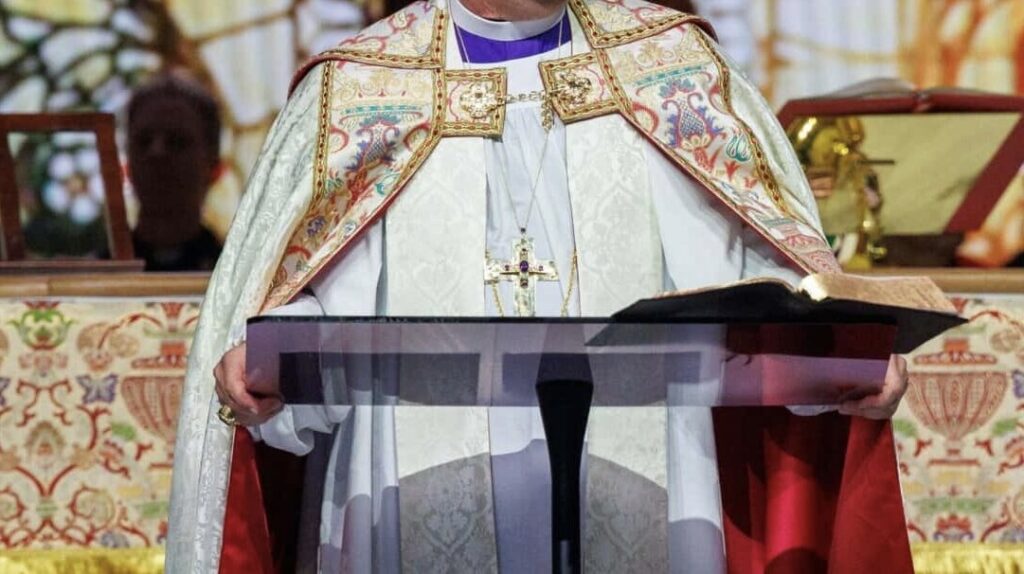
The latest Anglican Church in North America bishop’s scandal has fueled online lamentations about the supposed irretrievable corruption of that denomination, which was founded just 15 years ago in the wake of departures from the liberalizing Episcopal Church. Some now question, “was it all for naught?”
There are commonly among contemporary American Protestants unreasonable expectations about the institutional church. New schisms, escapes or new structures supposedly will inoculate any church from human depravity, cupidity, vanity, and bad judgment. But chronic human propensities cannot be escaped. They can only be guarded against, managed and partly remedied. The aspiration of every church, and for every Christian, should be holiness and even divine perfection. But these aspirations cannot be confused with routine expectations. There will be human failures. The church should anticipate them and be ready to repair.
Of course, church members cannot be passive or indifferent about their church leadership, which only permits greater likelihood of scandal and misconduct. But they do need to be realistic and patient. The church is glorious because of its Head, whose shed blood cosmically covers the church in righteousness for all eternity. But the earthly reality is often very messy. Every lay person and clergy constantly must contend against the world, the flesh and the devil.
Maybe there is greater patience among Roman Catholics, who see their church as “the” church. But Protestants are by definition in constant flux. We want reform and change. And we are never satisfied with the results. This is Protestantism’s great strength, a ceaseless striving for better. But it can be destructive. Institutions typically must be built and sustained for God’s work to proceed. The old denominations that dominated America for nearly all its history are breaking and receding. They lost sight of their mission, blindly assumed they would always be dominant, and could not adapt to new realities in American culture.
Some refugees from those denominations have formed new denominations, most of which churn along under the radar, their struggles unnoticed by wider society. Anglicans, because they are more colorful, wealthier, and often more prominent in society, get more public attention. The Washington Post has run a series of articles about Anglican turmoil, all of them no doubt well read and much discussed. Larger new denominations with similar histories are ignored. Who wants to read about dull Presbyterians? Or, even less so, about even duller Lutherans?
Of course, Protestants are less and less in denominations. American Protestantism is becoming post denominational. Growing churches are typically unaffiliated. And even many denominational churches behave as though unaffiliated. Many church members are often unaware of any denominational affiliation, or if they are, they are indifferent. Many escapees from denominations think they have found safety in independent congregations. But troubled human nature finds them there too. And absent wider structures of accountability, however faulty, independent congregations often struggle amid scandal and misconduct. Often the pastor is dominant and cannot be challenged. Sometimes there is a mass exodus or a congregational split in the wake of scandal.
Nearly half of the congregations that recently exited United Methodism have not affiliated with the new Global Methodist Church or any other denomination or network. They understandably feel burned by their previous denomination and see these outside connections as only a hindrance, sometimes expensive. But can they survive long term if suffering scandal or deep division among themselves? Absent denominational ties, what will keep them together long-term institutionally? Perhaps the future of American Christianity is even more Protestant, with constant schisms and new creations, with most Christians not staying anywhere for very long. Congregations will survive only so long as they can command a customer base, like a grocery store. This arrangement has some merit. Dull or dysfunctional churches quickly die, while more vital ones quickly take their place. Such a cycle seems unstable, with a somewhat low view of the institutional church. But at least it is dynamic.
The opposite of dynamic, the latest statistics from the United Methodist Church are woeful. It has fallen below 4 million members for the first time since the 19th century. (I calculate this based on the total membership of denominations that merged into what became United Methodism in 1968, when it was at its height of 11 million members.) Now at 3.9 million members, and losing several hundred thousand members annually, it may legally exist in ten years but not functionally. We can pray that thousands of individual congregations out of the current 20,000 may endure and outlast the denomination. To do so, they will have to have an independent spirit that transcends the denomination. Given the current state of American Christianity, that independent spirit is common.
It’s a difficult balance, creating stable, enduring churches, with leaders held to high standards, amid widespread impatience with any institution that does not conform to inflated expectations. There is also amplified individualism, with Christians finding their own identity online, which is more easily controlled, instead of the compromise and forbearance required by physical communities full of flawed, sinful humans, more than a few of whom are misfits and egotists, who are especially prone to seek leadership.
The Anglican Church in North America, which is a small denomination of only 130,000, defies the American trend away from Christian traditions. It includes unusual Protestants who still want ties to Christian historicity, for which there will always be a market. They will likely survive and, maybe, amid the choppiness, even continue to grow. But even they will always be subject to the wider wildness of chronic Protestant chaos and progress.



Comment by Qohelet on October 24, 2025 at 7:32 pm
I was wondering what the IRD would do now that one of their chosen “Orthodox Christian” denominations has been hit with scandal. I’m somewhat amazed that you managed to twist an Anglican’s mistreatment of staff into a discussion about why the United Methodists are dying.
That “Orthodox” (read anti-gay) Christianity seems to attract sex scandals is not a mistake. It’s not normal to obsess over other people’s sex lives. Most people don’t do it and Jesus certainly didn’t do it. Enforcing sexual purity just isn’t at the heart of the Gospels. But to some people it is the only thing that matters.
At this point in my life I apply the logic of flatulence to this topic: he who smelt it dealt it. The more a church emphasizes sexual purity at the core of its beliefs, the worse the scandals are going to be. The Catholics found that out, then the SBC, and now the ACNA.
Comment by Mark on October 24, 2025 at 10:15 pm
“Greater patience” is not the phrase I would use to describe the Roman Catholic Church’s response to abuse and scandals within its ranks. More like “greater intransigence.”
Comment by Glenn Wheeler on October 24, 2025 at 10:46 pm
Absolutely, Mark. The perverted child sexual abuse behaviors that caused the sex scandals in the RC church were not exceptions, they were/are the norm. That sort of behavior, and the fact that they attract sexual perverts in their hierarchy, is endemic to that organization.
Disgusting.
Comment by PFSchaffner on October 25, 2025 at 8:04 am
The emerging American (or perhaps Anglo-American) church model is perhaps less like a grocery store and more like a streaming bundle. We’ve been church-shopping this year, and every one we’ve visited has offered some shows we like, and some we can do without; partly these choices are matters of taste, partly of conviction, and partly of life stage (families with kids will choose churches that cater to families with kids; greybeards may settle for a church populated by same: no growth, but at least they can escape the horrible ‘worship’ and deafening 3-note ‘praise bands.’) More importantly, the churches themselves were all in transition. The governing notion used to see the church as a stable body which transient human beings could solemnly join and thereby gain an abiding connection, but actual experience suggests the very opposite. Individuals are stable; they tend to believe and practice the same things at age 70 as they did at 20. During that period, churches will have come and gone, blown about by every passing wind of fashion and demography: there is no stability there to latch onto, and entering into a solemn covenant with this month’s streaming bundle seems simply silly, like signing a lifetime contract with a cell-service provider. We moved to this area almost 40 years ago: we joined a Presbyterian church (it went charismatic and died); then attended a Baptist church (it went ‘seeker,’ hid its Baptist identity, and died); then a Methodist church (it split in two (UMC & GMC) last year). Since the Presbyterians, we’ve actually joined none of them.
Comment by Salvatore Anthony Luiso on October 25, 2025 at 11:55 am
I think it’s perfectly understandable for members of the ACNA to expect that their denomination would not suffer not just one scandal, but a series of scandals, within 15 years after its founding.
I also think it’s perfectly understandable for its members to be dismayed and distressed that it has suffered a series of scandals in so short a time.
I would not call them “impatient” nor their expectations “inflated”.
Neither would I call Protestants in general “impatient” or “by definition in constant flux”.
The magisterial Reformers wanted reform in accordance with the eternal standards of God which are recorded in the Bible. They wanted and intended their reforms to be *conserved* and to *endure* to the end of the world. They did not think constant turmoil and schism were necessary for their churches, and they did not want it. They wanted faithfulness, steadiness, stability, peace, and unity.
Regarding “We want reform and change”: Reform and change in accordance with the Bible is healthy and good–reform and change which are contrary to the Bible is unhealthy and evil. Unfaithful complacency and stagnation is also evil.
Note this difference between the formation of the ACNA and the formation of other denominations: the ACNA has never been, nor ever sought to be, totally independent and autonomous. Its origins involved a transfer of membership from one part of the Anglican Communion to another part of it. Like the origins of the Reformation, the origins of the ACNA are not progressive, but *conservative*..
Comment by Dennis Crowley on October 25, 2025 at 3:58 pm
I became a born-again Bible believing Christian in 1981. Since that time I have been super-active in ministry in the church. Churches do not like conflict, or even discussion about conflict. Many times I went to the pastors and told them about very difficult individuals that needed pastoral care. I received a guilt trip about letting people bother me, and was told to pray harder and relax. The issues were swept under the rug and sometimes years later just blew up and the church was in shock about why “nobody came to them.” Galatians 6:7 spells it out “actions have consequences.”
Comment by Cal on October 25, 2025 at 9:08 pm
It finally dawned on me that religious orgs are not necessary and often are a hindrance to spiritual health. I attend only for family reasons. My real progress is independent of the org.
Comment by Larry Jackson on October 25, 2025 at 9:40 pm
Jesus had a memorable word for such religious leaders: “hypocrites.” “Greater patience “ is scarcely what he urged. The episcopy, whether RC or Anglican, by definition is about power. Not surprising what rotten fruits power bears.
Comment by Gary Bebop on October 26, 2025 at 12:06 am
My thanks to Mark Tooley for (another) insightful reconnaissance of Protestant churches. Mark understands his market because he’s long been personally embedded in it. He’s not fooled by the marquee, the program hype, the word salad mission statements. He doesn’t gloss the many flaws and failures and foolish novelties of the modern church, whatever its brand. Mark Tooley is not a bitter churchman who has nothing good to say about corporate Protestantism. He’s a warrior, and he’s in the good fight. But I would encourage Mark to be a little more confessional in his next post about the church’s future.
Comment by DM on October 26, 2025 at 10:57 am
I have reached that blessed place where when I see the word church in the title – I know to move on to a place as far from it as is possible. And this status – knows no discriminations.
Comment by Kenneth Cohen on October 26, 2025 at 6:37 pm
Where there is disparity of power, there will be those who will abuse it.
There have always been religious leaders who have sexually misbehaved. The difference is now the culture has changed and it is more likely to be reported. The downside is that the churches look terrible. The upside is that this will be an incentive for leaders to behave themselves and that safeguards will be put into place.
Comment by Thomas on October 26, 2025 at 11:39 pm
A person who says this never read or understood the Gospels. “Enforcing sexual purity just isn’t at the heart of the Gospels.” Didn`t Jesus stated that celibacy is superior to marriage? Didn`t He said that we should try to accept the Kingdom of God as children?
Comment by Glenn Wheeler on October 27, 2025 at 12:08 am
I love the comments to this article. They illustrate that people have had it with institutional Christianity. They’re through with it, have had all they will take of it. People are leaving it in droves and will continue to leave it. The only ones who defend it are the Professional Christians, those who get their paychecks/retirement checks from the denominations. Institutionalized Christianity is dying, thank goodness, and Christianity will be better off when it is a thing of the past.
I guess the market will soon be flooded at auction with surplus humongous video screens …
Comment by Thomas on October 27, 2025 at 10:07 am
Christianity has face many crisis and always survived, because it is of divine origin. The Christopher Hitchens of nowadays once again will be proved wrong.
Comment by Mark on October 27, 2025 at 3:03 pm
Thomas,
That was Paul who said celibracy was better than marriage, not Jesus.
Comment by Mark on October 27, 2025 at 3:13 pm
Glenn Wheeler,
Christianity is not a solidarity religion. You can’t hate the factionalism, the bureaucracy, the money, splendor, and all the other venial sins that seem to inevitably emerge in any church or Christian community. I don’t care for them either, but if you going to encourage people to stop attending church altogether and just live like hermits praying and practicing their faith alone at home without any Christian community at all, then you’ve gone off the deep-end. Like Jesus, we are never more subject to temptation than when we are alone. We are never more likely to confuse the Voice of God with our own pride than when we are alone. We are never more exposed to outside influences when we have no inner community of believers grounding us.
Comment by Lowell Patterson on October 27, 2025 at 8:51 pm
Ephesians 04/11:” So Christ Himself gave the apostles, prophets, evangelists, pastors, & teachers, for the equipping of the
Saints”………
E everyone needs to know that for some unexplainable reason ALL pastors read that verse ( unknowingly)- as: “ So Christ himself gave some pastors, some pastors, some pastors, some pastors, and….some pastors.
With( maybe/rarely) an evangelist thrown in-most church attendees only know God by way of pastor. That is NOT how Christ’s body is to function. Unless the 4/5ths of the full stature of Christ is installed in THE CHURCHES, do not expect things to get better. No, I do not say that every assembly has an apostle……BUT, everyone needs to experience the fulness of Christ nature as given forth by the full servant leadership. Way too many people are flaying about, struggling in their growth because they have not been given the stature of Christ nature that is only available in 5-fold servant leadership. I have no expectation of denominations ever understanding & implementing this truth. No man can give forth the fulness of Christ nature: each office is to be available for a reason.
Comment by Glenn Wheeler on October 28, 2025 at 12:27 am
Mark,
You should direct your comments to pastors, administrators, and denominational officials, i.e., the Professional Christians. They’re the ones who destroyed institutional Christianity, not the people in the pews.
Comment by Eric Rathburn on October 28, 2025 at 7:02 am
The Church of Jesus Christ will never end, the Lord as much made that proclamation. How we approach this is the crux of the issue. Is the universal church communal and corporate? Absolutely. There is no Christianity without those two aspects. Communal life should be placed at the forefront, while simultaneously keeping bureaucracy (“the institution”) in check.
Those commenting here that they’re done with “church” will find their spiritual lives ebbing, like the proverbial lump of coal removed from the fire.
Comment by Glenn Wheeler on October 28, 2025 at 8:34 am
Funny how pastors and religious bureaucrats equate “The Church” ™ with themselves.
Comment by Mark on October 28, 2025 at 11:56 am
Glenn Wheeler,
Pastors and administrators are sinners like you and me. Expecting them to be perfect is a recipe for disappointment. The Church is meant ot be a hospital for sick, not a temple for the pure. There are practical steps churches can take prevent abuse and corruption. One is by having the pastor and senior leadership accountable to oversight, either from a denominational entities such as dioceses and bishops or at the local level through lay-led committees and assemblies. Generally, a mixture of these two models is best.
Comment by Thomas on October 28, 2025 at 9:36 pm
Mark, I meant that quote when Jesus says that were be men who shall become enuchs in spirit for the love of the Kingdom of Heaven.
Comment by Glenn Wheeler on October 29, 2025 at 12:06 am
Mark,
I’m not talking about them being sinners like everyone else. I’m talking about their complete incompetence as leaders, about them holding themselves above the people in the pews and looking down on them and despising them (and yes I have enough experience with these people to know that’s exactly what they do). I’m talking about their attitude that just because they have the titles that they expect everyone to follow them. The fact is that they have been abject failures. They have destroyed Christianity in the United States, and who in the world can blame us when we tell them, “We’ve had enough of you and your ilk …Draw your retirement and benefits and fool yourselves into thinking you did Jesus’ work. We’ll move on.”
And that’s exactly what we’re doing…and we’ll never go back to them again.
Comment by Mark on November 6, 2025 at 9:15 pm
Glenn Wheeler,
Where will you go?