
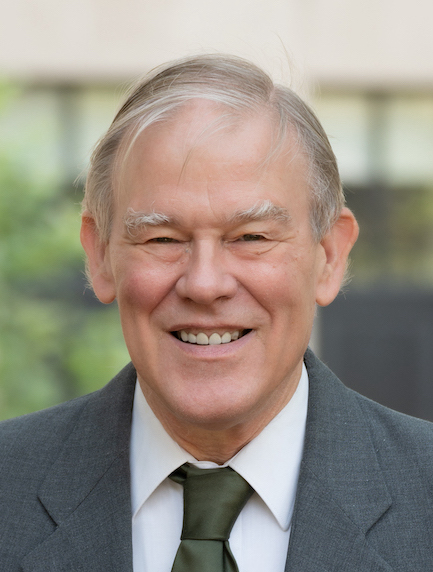
The Alliance Defending Freedom (ADF) International gathered a panel of experts to discuss the continuing effort to restrict the freedom of traditional religions in the West at the International Religious Freedom Summit in Washington on February 4. Sean Nelson, Legal Counsel for Global Religious Freedom with ADF International introduced the panel. Commenting on an opening video of three current high profile religious liberty cases in Europe he said that the defendants are perfectly respectable, law abiding citizens whose true offense was publicly expressing opposition to the prevailing doctrine of moral autonomy, in two cases involving homosexuality, and in a third involving abortion. He observed that in this regard ADF International is having to give increasing attention to the West. Although the cultural Left and the legacy news media have endeavored to deny that conscience objection against homosexuality or abortion are religious liberty issues, Nelson pointed out that the U.S. Commission on International Religious Freedom recognizes the denials of conscience objection on sexual issues as religious liberty violations.
Moral Conflict in Europe
The panel’s first speaker, Todd Huizinga, Senior Fellow for Europe of the Religious Freedom Institute observed that Western societies “arose and were sustained over the course of many centuries by a basic Judeo-Christian consensus.” Because this consensus is no longer shared by many in society, people in the West are now “diametrically” opposed to one another on such fundamental issues as “what does it mean to be human?” “What constitutes human freedom and human flourishing?” “What is the nature of truth?” In this “worldview pluralism … the restriction of the religious freedom of those who hold the traditional teachings of their faith is a growing problem.”
Through “the misuse of anti-discrimination laws,” believers are denied “the full and free exercise of their faith.” Such policies result in “increased hostility” toward religion in society at large. The focus of attack is the belief in life-long opposite-sex monogamous marriage as the proper context for a sexual relationship. This “clashes” with the progressive belief that “sexuality is subject only to human choice.” It’s held that “gender, is fluid, and that the very idea of objective truth, as espoused in most religions, is oppressive and repugnant.” This would seem to make self-will the ultimate value.
Huizinga said that “we must distinguish, much more carefully, between discrimination and disagreement … Antidiscrimination law should safeguard everyone’s rights, not just those the progressive Left deems to be vulnerable.”. Criticism or conscience objection against deviation from traditional sexual morality “does not impose a particular religious faith on anyone.” As this writer has noted before, criticism of human behavior and inclination is not an attack on persons; any civilized society requires that human behavior be subject to judgment. Huizinga said that “a relativistic” solution of the societal divide is not adequate. “Religious freedom is about the pursuit of truth,” he said. Nelson observed that relativism can incline people to self-censor (i.e., not post a particular comment, not pray in particular places, etc.).
Shrinking Religious Freedom in Canada
Next Nelson introduced Janet Epp Buckingham, a Canadian lawyer and professor who is currently Director of Global Advocacy of the World Evangelical Alliance, and advocates for religious freedom at the U.N. She observed that “Canada is much more secular” than the United States. Nevertheless, Canada does have “a long history of religious freedom.” Currently, Canada’s “Charter of Rights and Freedoms,” adopted in 1982, echoes international agreements on human rights. “Freedom of conscience and religion” is the very first freedom mentioned in the charter.
However, in protecting rights, it important to recognize that “it’s all about interpretation.” She said that the very first test in court of the Charter’s guarantee of religious freedom concerned a drug store being open on Sunday, in violation of existing blue laws. The court echoed international standards, saying that religious freedom is a right “to entertain such religious beliefs as a person chooses, the right to declare religious beliefs openly and without fear of hinderance or reprisal, and the right to manifest beliefs by worship and practice, or by teaching and discrimination.” Buckingham observed that the court recognized “individual and collective practice of religion and protects all of it.”
More recently, courts have recognized religious freedom as an individual right, while not recognizing a corporate right of conscience. Citing a number of cases which were lost (including her own Trinity Western University), she said that she was “concerned about the lack of robust protection for corporate religious freedom.” An ongoing case involves the Archdiocese of Montreal, in which a Catholic hospice does not want to be required to offer Medical Aid in Dying (MAiD) which is offered in Canada, because this is contrary to Catholic teaching.
Anger at Judeo-Christian morality – which was dominant in the past – appears to be the reason for much of the attack on religious freedom in Canada. Thus, when evidence of abuse is found with churches or Christians, it is highlighted in the media and motivates attacks. Buckingham said that ground penetrating radar seemed to have discovered 200 unmarked graves at one of the residential schools for Indians (which were run by churches). This was followed by approximately 100 churches being “burned to the ground,” and “no one has been prosecuted.” There have also been numerous attacked on Jewish schools and synagogues since the attack on Israel from Gaza on October 7, 2023. Again, there is no prosecution for these crimes.
Another issue with religious freedom in Canada is the “notwithstanding” clause. It allows the Canadian Parliament to override “rights that are protected in the Charter.” Buckingham said that the province of Quebec has used the “notwithstanding” clause “with wild abandon.” Government employees there are forbidden to wear religious symbols. This includes particularly “teachers, police officers, judges, court officials, daycare workers.” This is being challenged, however, and the case will soon be heard by the Canadian Supreme Court. What would seem to be an even more radical proposal is to prohibit prayer in public. “The idea behind it being nobody should have to be exposed to any religion, anywhere in public.” Another proposal in Canada is to remove “advancing religion” as a basis for charitable status. She said that this “would have a dramatic impact on Canada” because “40% of charities in Canada are religious.”
Nelson observed that the situation in Canada amounts to a “shrinking space” for religious belief and activity. He said that the conflict is going beyond the denial of corporate religious liberty to a denial of individual religious liberty. He then introduced Rabbi Emile Ackermann of Yeshivat Chovevei Torah Rabbinical School, a modern Orthodox yeshiva, to discuss religious freedom in France.
Laicite in France
Ackermann defended France’s laicite policies, enacted in 1905, which limit religious freedom. These were introduced “to fight the influence of the church, especially in education,” and to “separate the church and the state.” In the laicite regime “the state recognizes individual rights, and not collective rights at all.” Religious freedom is thought to be only that which comports with “modern values.” He pointed out that today in France, any display of religious symbols is thought to indicate that one is “a dangerous sentimentalist” who “wants to force your religion on others.” There is also an “Islamaphobia” debate. This centers around whether criticism of Islam is discriminating against Muslims, or whether the objective of banning criticism amounts to “silencing critics of the religion.” Ackermann said that polls in France indicate that at least half of young people think that the law should ban blasphemy. But he said that it is essential to distinguish between “ideas and identity … criticizing religious ideas or practices is not the same as discriminating against believers.”
The distinction between ideas and people is crucial in considering antisemitism, Ackermann said. One may criticize Judaism as a religion or Israel and its foreign and domestic policies without being antisemitic. True antisemitism is an attack on Jews “as a people.” It is Jews as human beings who are hated. True antisemitism can appear in different forms, he said, whether as a result of religious doctrine, a claimed racial basis, or (more recently) resulting from opposition to Zionism.
Conclusion
Nelson asked what changes should be made with respect to religious freedom in the West. Huizinga said that antidiscrimination law should not be interpreted as imposing a new sexual orthodoxy on society, and religious believers in particular. Buckingham said that it might be helpful to define religious freedom in Canada, as has been attempted, but doing it is “fraught.” On the other hand, “it might be helpful if it’s done well.” if the definition is “done well.” She said that judges often do not understand religious arguments made in court. She also observed a serious problem in that many countries are enacting “hate speech” laws, “because there was a recommendation at the U.N. level that countries adopt these.” A recent proposal in Canada was to authorize restraining orders against someone “who might” utter hostile comments about a protected identity. This needs to be vigorously opposed, as already indicated. Ackermann said he recommends no changes to law about religion in France, as he considers that the country has not had a problem with religious speech being suppressed (quotations from the Bible being “hate speech,” etc.). But other panelists seemed to indicate a continued need for vigilance and action, by those who are able to engage severe challenges to religious belief and practice that strike at the heart of particular religions.
This continued need is probably the important point made by the panel. Despite crucial victories in some cases – Masterpiece Cakeshop (2018) and 303 Creative (2023) in the United States and Asher’s Bakery (2018) in Great Britain, challenges to religious freedom which attack Judeo-Christian morality in the name of moral autonomy continue in the West. The objective of making state-defined morality into a permanent regime remains in the sights of its advocates. Those who would defend religious freedom and liberty of conscience must be vigilant and continue to respond to attacks, as well as endeavor to recover lost ground.



Comment by Wilson R. on February 14, 2025 at 3:04 pm
Now, mainstream Christians are applying the same argument that conservative religious groups have successfully used in court to claim it’s an infringement on their religious freedom if they have to employ LGBTQ people or allow health insurance plans that cover contraceptives.
They have filed suit claiming that serving immigrants and refugees regardless of their legal status is an exercise of their religious beliefs. And it’s true that those beliefs run deep among these Christians and has long been part of their practice.
There’s a limit to how long I can hold my breath, but I bet it won’t be long enough to see any of the bloggers here defend the religious liberty of Christians who defend refugees and immigrants.
Comment by David on February 15, 2025 at 7:32 am
For many years, it was the practice in Quebec to have a crucifix displayed in courtrooms and over the speaker’s chair in the legislature. These have now been removed which most Americans would find appropriate. The new law forbidding Jewish skullcaps and Sikh turbans is going too far. Religious dress is an individual’s right as a practice of religion. France has similar prohibitions.
There cannot be prosecutions of arsonists of religious property unless they are caught. The implication of the article is that government overlooks these acts which is unfair.
Speech which provokes enmity towards other groups is often prohibited outside the US. This is why the US is the prime source of Nazi publications.
Comment by Different Steve on February 18, 2025 at 8:13 am
Pope Francis’s Apocalyptic Dream
https://firstthings.com/pope-franciss-apocalyptic-dream/
Comment by Wilson R. on February 18, 2025 at 1:42 pm
My state legislature is currently advancing a vaguely worded bill that could criminalize the work of churches and non-profits that serve immigrants. If you help them find permanent housing or a job, or even if you provide services that any church would offer people who are accepted into the congregation, and if you don’t first determine whether they’re documented or not, church members could face felony charges. The bill even asserts that the secretary of state could “dissolve” churches and nonprofits.
The wording of the bill is so broad that it is bound to have a chilling effect on any church that serves immigrants — like the congregation I was once part of that housed a Hispanic congregation and even held bilingual worship services with simultaneous translation. We later learned that some of these people were undocumented refugees who had fled violence in Mexico and Salvador. The church did nothing that actively supported “sanctuary,” other than providing a sanctuary for worship. But under this law, the state conceivably could have intervened. Many congregations will simply end all outreach to immigrants, regardless of their legal status, rather than run the risk of being charged by some zealous Christian Nationalist prosecutor–and that of course is part of the law’s intent.
Our bishop recently sent out guidance to churches about educating people on their rights if ICE showed up. Under this new bill, that act would be specifically targeted for criminal prosecution.
Not a peep about infringement on religious liberty from this organization that supposedly fights to protect religious liberty. We all see the double-standard being applied. If you want to assert your religious values/mission in refusing to hire LGBTQ employees or baking a cake for a same-sex wedding, IRD and Alliance Defending Freedom will have your back. If you’re a Christian trying to live into the command to love the stranger and the refugee, there will be nothing from silence–or excuses that your religious freedom is not protected because yours is a “false” religion.
Comment by Different Steve on February 18, 2025 at 4:31 pm
Pope Francis’s Great Blunder
Recently, Pope Francis sent a letter to the American bishops, more or less telling them that they must resist President Trump’s immigration policy. “I have followed closely the major crisis that is taking place in the United States with the initiation of a program of mass deportations,” the Pope wrote, and “the act of deporting people who in many cases have left their own land for reasons of extreme poverty, insecurity, exploitation, persecution or serious deterioration of the environment, damages the dignity of many men and women, and of entire families, and places them in a state of particular vulnerability and defenselessness.”
This is an exceptionally political statement. It takes an exceptionally ideological position. It is also exceptionally foolish and potentially exceptionally destructive. As R.R. Reno noted at First Things, the Pope’s stance is a “recipe for ecclesiastical suicide,” meaning it forces Americans to choose between loving their country and doing what the Pope insists is the only truly acceptable thing to do in this situation. In short, the Pope is pitting the Church against the very idea of “America,” against the “shining city upon a hill” that has captured the spirit of freedom and the imagination of people worldwide for nearly a quarter of a millennium. The end result of this can only be that some people—many people, most people—will choose to ignore that which the Pope and his bishops insist is a moral necessity. That is a disastrous outcome and sets a disastrous precedent.
https://amgreatness.com/2025/02/15/pope-franciss-great-blunder/
Comment by Rick Plasterer on February 19, 2025 at 7:44 pm
WilsonR,
The Bible certainly indicates God’s concern for the widow, orphan, and stranger, and that we ought to help such people. It does not indicate that we should assist in the illegal entry of people to a country (or in ancient times, a kingdom or empire).
Rick
Comment by Wilson R. on February 20, 2025 at 8:50 am
Yes, Rick, I agree that the Bible does not indicate that we should assist in illegal entry. At the same time, your post is disingenuous for several reasons.
First, Christians who serve immigrants live out their understanding of the biblical call to serve whoever God puts in front of them. When opening their doors for worship or a food pantry, they do not ask people about their immigration status, nor should they, because it is not relevant to what they provide. I have donated furnishings I didn’t need to help immigrants settling into an apartment. Did they have papers? I don’t know. But now, that act of charity could be prosecuted in my state.
Some Christians feel called to leave water in the desert for migrants. Though this comes closer to law-breaking, since it is understood that the people being served are crossing illegally, it also can be considered part of a religious practice, since Christians (presumably) feel that even a migrant’s desperate act of law-breaking doesn’t merit death in the desert.
Second, a large percentage of those here “illegally” are not undocumented at all. They simply availed themselves of US asylum laws. They intended to be caught, even seeking out Border Patrol agents so they can surrender. (As someone who owns property on the Rio Grande, I have some knowledge of this.) Their presence gets documented, and they have a right under current law to have their case heard. But under the bill advancing in my state, serving these legal “illegals” through a church would be considered as “human trafficking.” ICE is rounding up and deporting people even as they arrive in court to have their cases heard.
Third, what some may regard as Christian liberty—such as the freedom not to bake a cake for a same-sex wedding or to discriminate in hiring against people that a church regards as living in a sinful lifestyle–many other Christians would regard as sin. And yet they would acknowledge that these “discriminators” are following a sincerely held religious belief. When the shoe is on the other foot, however, it appears that IRD (as I predicted) will simply dismiss the beliefs of those who serve immigrants as inauthentic and, therefore, unworthy of having their belief defended.
Comment by Wilson R. on February 20, 2025 at 11:48 am
One more thing: Bear in mind, please, that the bill advancing in my state’s legislature asserts that the state attorney general has the power to “dissolve” any church he deems to be in violation of this law. Providing furnishings for an immigrant’s apartment, providing regular transportation to a job site, or even disseminating information about people’s rights if ICE stops them (as my bishop has done) could all be prosecuted as violations.
Surely, I imagined, an organization dedicated to defending religious liberty would recognize a threat in a state’s assertion of the power to “dissolve” a church (whatever that means).
But as with so many other issues, it appears that the principle of religious liberty applies only to those whose religious doctrines you agree with. And a principle that applies only to some is not a principle at all.
Comment by Rick Plasterer on February 20, 2025 at 2:15 pm
WilsonR,
Due to some feature of this blog, my earlier comment did not display when I posted it yesterday. In the meantime, I thought of an additional point that is crucial in liberty of conscience cases. Now I find yesterday’s comment appearing along with your response. So I’ll quote what I intended to add (since it is relevant to your latest comment, which I just saw):
“Additionally, as I have said before, a religiously neutral state must be able to restrict religious activity where it is judged intolerable, but should never require action against religious precepts, which sexual orientation and gender identity (SOGI) laws are interpreted to require.”
Assisting illegal immigrants (like human sacrifice and polygamy) is an action taken, not an action declined. Refusing to cooperate in sin (such as baking a cake for a same-sex wedding) on the other hand is an action declined.
There may be cases where one does have to disobey the law (such as the religious education of children in some jurisdictions). In those cases, one simply has to obey God rather than men.
I really wonder if a state or the federal government can dissolve a church (or other religious organization). Freedom of religion and association both would seem to preclude that.
Rick
Comment by Wilson R. on February 20, 2025 at 3:26 pm
Rick:
I appreciate your response, but again I think you’re being disingenuous. Of course the state has an interest in preventing religious activity such as polygamy (a good example) when it is judged intolerable. No argument there.
But your attempt to distinguish between actions declined, based on precepts, and actions taken (also, of course, based on precepts) falls flat to me. Let’s use the actual, real-world example of a church or religiously affiliated school turning away an LGBTQ job applicant or firing a teacher who is discovered to be gay or lesbian. What you call declining to participate in a sin, and thereby not an “action,” I would call just the opposite. Firing someone is an action. Telling someone you are going to discriminate against them as a job candidate because of their sexual orientation, even if it sincerely reflects your religious precepts and practice, is an action. And the state surely has an interest in non-discrimination and upholding the protections of the 14th Amendment that need to be balanced against your freedom of religious practice. That’s the line the courts have tried, uneasily, to walk.
Likewise, the action of “assisting illegal immigrants” isn’t nearly so cut-and-dried as your response implies.
On one end of the spectrum would be “actions” such as actively helping people cross the border illegally, or paying for a coyote to get someone’s relative across, or picking them up and transporting them to a “sanctuary” before they can be caught by the Border Patrol. Those actions in my mind would clearly run against the state’s compelling interest and against existing law–even if done as crimes of conscience in willing defiance of the current law (as was the case, lest we forget, with the cake baker in Colorado who later prevailed at the Supreme Court).
But that’s not the kind of action I’m talking about here that would be criminalized under a new state law.
If Catholic Charities rents an apartment to a Venezuelan who has requested asylum here and whose case is awaiting a hearing, they could be dissolved under this law, because that person does not have formal legal status in the US (and the law does not account for the possibility that they may be granted legal status by the immigration court).
If someone in the Hispanic congregation at my church asks if I would be willing to hire them to clean my home, and I allow it without knowing their immigration status because they’re a part of my faith community and that’s what we do, and it turns out that person is undocumented or awaiting an asylum hearing and I wasn’t aware of this, I would still be guilty of a felony and could face 6 years in prison under this law.
The clear intent of the bill is to have a chilling effect on any church or nonprofit that serves immigrants. They want to deter people from serving them, and that is what will happen if the bill becomes law (which it almost surely will).
These are legislators who already have passed a bill last month to allow public schools to refuse to educate children whose parents are undocumented, in spite of a Supreme Court ruling to the contrary. They just don’t care.
The cake baker in Colorado thought the anti-discrimination law was so offensive to his religious precepts that he was willing to defy the law and risk the consequences for the sake of his faith. Those who leave water in the desert to prevent illegal immigrants from dying of thirst are doing exactly the same thing, and any organization that purports to stand for religious freedom ought to at least recognize this equivalence.
Comment by Wilson R on February 20, 2025 at 4:51 pm
Rick:
I pondered over the same question about whether government can “dissolve” a church. I checked the bill, and that is the language they used. I have written my state representative about it. There is no detail about how they intend to go about a dissolution, which I suspect is meant to apply more to the registration of a nonprofit than to a church (but the bill nevertheless applies to churches). It’s an astonishing assertion of power over religious liberty. And if that’s a fight they want to have, I say let’s go, and be sure to bring a sack lunch. I would make the same statement, by the way, on behalf of a church whose views on certain issues I don’t agree with.
Comment by Rick Plasterer on March 6, 2025 at 1:39 pm
WilsonR,
Just reviewing the above comments at this late date. I do think that a religious organization refusing to hire someone is an action declined, and even firing someone who violates religious precepts is an action declined. Otherwise the organization has to function in violation of its precepts.
I realize that the currently eroded yet still binding Employment Division v. Smith decision says that a person may neither take a religiously required action nor decline a religiously forbidden action if it violates neutral, generally applicable law. But requiring action against religious precepts is morally repugnant and makes religious freedom mean very little. A sincere believer, of course, must obey God regardless of the state.
Rick