
Supposedly the 1925 Scopes Monkey Trial in Dayton, Tennessee, over whether evolution could be taught in public schools, embarrassed Christian “fundamentalists” out of public life until the 1970s. The reality is more complex.
Keeping the Faith: God, Democracy, and the Trial That Riveted a Nation by Brenda Wineapple tells the story of the trial but does not reflect deeply about its long-term impact on religious public witness. Instead, she focuses on the supposed similarities of the trial and its era to today, amid debates over populism, Christian nationalism, and race.
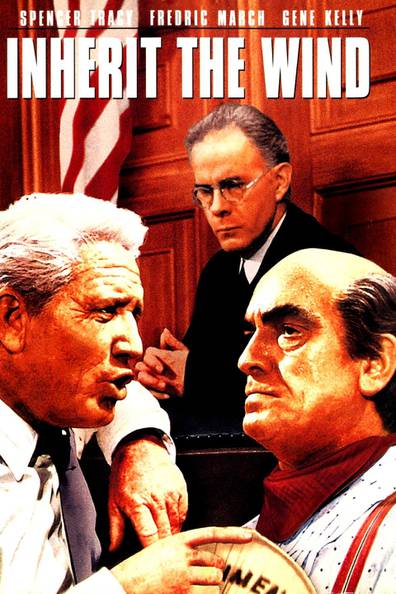
The trial was chiefly about the large personalities of perennial presidential candidate William Jennings Bryan, who joined the prosecution, and famed trial lawyer Clarence Darrow, who joined the defense. In 1960, the trial was dramatized in the film “Inherit the Wind,” with Spencer Tracey portraying Darrow, Fredric March as Bryan, and Gene Kelly as cynical Baltimore reporter H.L. Mencken, who despised backcountry America. Of course, the film is not historically accurate. Defendant John Scopes was never jailed. The jail was never attacked by an angry mob. Scopes was not romantically involved with the daughter of the town’s fundamentalist “spiritual leader.” That fiery preacher, whose denomination is never cited, is sinisterly portrayed consigning a drowned unbaptized boy to hell in his funeral sermon, an odd teaching for any Protestant preacher, fundamentalist or not. The film portrays the town’s religious people as dangerously reactionary.
In reality, Dayton during the controversy was friendly and civil. It virtually invited national notoriety by staging the controversial trial for publicity and commerce. The American Civil Liberties Union publicly advertised for a schoolteacher to defy the law to precipitate a test trial, which the ACLU hoped would eventually overturn the Tennessee law as unconstitutional. John Scopes amiably agreed to cooperate as a defendant, although it’s unclear whether he ever taught evolution in the classroom. He persuaded students to testify against him. There was never any question that he would be found guilty, with hopes placed on higher court appeals.
Bryan eagerly volunteered to help the prosecution. He was a vociferous critic of Darwinian evolution as dehumanizing and immoral, a threat against the weak and vulnerable. He was the Democratic Party’s presidential candidate in 1896, 1900 and 1908. Secretary of State under Woodrow Wilson, and he strove to be a political kingmaker at subsequent Democratic Party conventions. At the 1924 convention, he successfully denounced a resolution condemning the Ku Klux Klan. Although a self-styled friend of the commoner, he was not a friend to black people, whom he thought should passively accept subordination in a white-led society. Bryan rejoiced at the 1919 enactment of Prohibition. And like many others, he saw post World War I America, despite Prohibition, as morally degenerating, with divorce increasing, rising religious liberalism and secularism, permissive sexuality, debauched entertainment, and America losing its definitive Protestant character.
Both Bryan and Darrow were political progressives. Darrow had supported two of Bryan’s three presidential campaigns. Both ultimately opposed eugenics as a threat to society’s most vulnerable. Both strove, selectively, to defend society’s outcasts. Both wanted activist government enacting greater justice. But Bryan was an ardent Presbyterian who wanted a society and public life centered on the Bible. Never ordained, he was a popular lay preacher and speaker on the Chautauqua circuit. He was a polished and charming if not sophisticated exponent of American populist folk religion. In the film “Inherit the Wind,” rapturous crowds in Dayton repeatedly greet Bryan with the hymn “Give Me That Old Time Religion.”
Darrow was an outspoken religious agnostic who defended unsavory murderers, enjoying publicity and money, but also sincerely defended unpopular political dissidents and minorities. He often spoke cynically but was suspected of being a secret idealist. He feared political and religious conformity. Some in the ACLU resented his role in the trial, which they did not want to be a clash over religion. But Darrow and Bryan ensured it would be exactly that. And the national media, including newsreels filmed in the courtroom, portrayed it so. It was a battle over God and the Bible.
“Inherit the Wind” portrays the town’s fiery preacher leading a histrionic evening outdoor revival full of threats and thunder that horrified even Bryan and the preacher’s daughter. In reality, Dayton was dominated by more subdued Methodists and Baptists. The trial judge was a devout Methodist who carried a Bible into the courtroom. Amid soaring Summer heat, the trial was eventually moved outdoors, adding to its theatricality.
As the book recalls, Darrow with reporters and others one evening during the trial attended a “holy roller” revival outside town. It was perhaps Pentecostal. The worshippers were anti-Darwin but mostly focused on repentance and salvation with great passion. Darrow and the reporters watched mostly in reverential silence, with Darrow admitting their sincerity and their need for faith amid poverty. He offered respect to them that he could not give to Bryan, whom he deemed self-serving.
Refused permission to call scholarly witnesses about evolution, Darrow surprised everyone by summoning Bryan to the witness stand to query him about the Bible. Appalling the rest of the defense team, Bryan readily acceded, his ego unable to resist. Although a lifelong teacher of the Bible, Bryan was no scholar or deep thinker. He superficially responded to Darrow’s efforts to discredit the Bible with bromides and quips. It was a fiasco for Bryan’s reputation. Darrow won in the court of public opinion even as Scopes was found guilty and sentenced to a $100 fine, later overturned on a technicality. The Tennessee law was overturned by the U.S. Supreme Court forty years later.
Bryan died in Dayton, only five days after the trial, after attending church, age 65. As a populist exponent of progressive politics and religious conservatism, he left no successor, which may partly explain why public “fundamentalism” receded as a political force. Prohibition was revoked in 1933. As the book notes, Bryan in 1923 was defeated as a candidate for Presbyterian Church Moderator. The New York Times reported in its front-page story that his “controversy” over evolution factored in his defeat. A nominating speech hailed his “uncompromising position for civic righteousness.” His successful opponent was hailed for not bringing politics into the church.
Wineapple, the author, tries to parallel Bryan with today’s “Christian nationalists.” And perhaps there is overlap but only to the extent that religion of all stripes has always infused American public life. The author stresses that southern segregationists opposed teaching evolution while also admitting that black Christians largely agreed. The Scopes Monkey Trial was about two opposing forms of progressivism. Both claimed to defend the vulnerable. Bryan and Darrow in the end were too absolutist to find common ground.



Comment by David on January 15, 2025 at 11:21 am
I read “Inherit the Wind” many years ago. The back cover description of the paperback mentioned it was an “Exodus” from the events and thus not intended as a strict documentary.
The book has perhaps three themes, the rejection of science, American anti-intellectualism, and the intrusion of religion into secular institutions. All of these have present currency.
In the 1920s, evidence for evolution was based on similar morphologies of lifeforms. In the 1940s, it was established that DNA carried genetic information. In 1977, it became possible to sequence DNA revealing the genetic “code.” PCR was invented in 1983 and allowed the amplification of DNA to quantities where it can be studied. The result of this progress was that it could be established that small changes in the genome can cause major changes in a lifeform. Darwin, who did his studies well before the Civil War, thought evolution was a slow stepwise change. This is now known not to always be the case.
Comment by Thomas on January 15, 2025 at 12:23 pm
Bryan is a reminder that a conservative, even fundamentalist, brand of Christianity only had many supporters in the Democratic Party. Nowadays that party is largely secular and almost totally hostile to Christian faith and values.
Comment by Wilson R. on February 3, 2025 at 4:59 pm
I think this is a useful column insofar as it debunks the badly distorted presentation of “Inherit the Wind” and notes some of the nuances and commonalities between opponents like Darrow and Bryan. Unfortunately, people have a tendency to remember the presentation of history they see on a movie screen more than what they might read in a historical work. Even in Tennessee, most people don’t know that the Scopes trial was a publicity stunt to bring people to a small, isolated community. The case is more a lesson about the unintended consequences of badly written laws (Gov. Austin Peay signed the anti-evolution bill into law to avoid a fight with the legislature; he did not imagine that someone would actually bring a test case against it.)
As someone who was trained as a historian and has read Bryan’s speeches, I wouldn’t exactly call him a “progressive” in the way that we understand the progressive movement of the late 19th and early 20th centuries. More accurate would be to label him a populist (a term that had a somewhat different meaning then than how the term is used today to characterize MAGA). There was certainly overlap between progressives and populists in the era of Bryan and Darrow, and the Populist Movement in the Plains States (Bryan was from Nebraska) and the rural South was about defending the interests of farmers and rural people against the big banks that influenced government policies favoring tight money and benefiting a corrupt network of capitalists.) But the Populist Movement foundered on the racism of the Populists, who squandered opportunities to join with poor Black farmers to pursue their common economic interests. Bryan, for all his admirable qualities, was guilty there.
It appears that the author Brenda Wineapple makes too much of the similarities between the fundamentalists of the 1920s and Christian Nationalists today. It’s a trap into which historians sometimes fall as they attempt to make a topic relevant to modern readers.
While it’s right to point this out, that doesn’t mean there are no similarities. In fact, the rejection of evolution science in favor of pseudo-scientific Creationism is the most glaring example, but the similarities go much deeper. Fundamentalism arose in America in reaction to fear of a modernizing world where non-English-speaking immigrants were literally changing the face of America, people were migrating from farms to cities and factory work, science began to challenge certain traditional views, there was a sense of greater permissiveness in society, and the United States emerged from World War I as an international power with the world’s largest economy. Fundamentalists were scared that the world they had always known, and from which they derived a sense of stability, was crumbling. It’s no coincidence that the rise of Fundamentalism after World War coincided with the worst suppression of civil rights in our history (to oppose Woodrow Wilson’s policies could get you jailed or deported) and the highest membership in the KKK in our history (the majority were north of the Mason-Dixon Line; I recommend Timothy Egan’s excellent “Fever in the Heartland”).
Today, not unlike as in the 1920s, I see Christian Nationalists reacting in fear to a sense that the social changes, unprecedented diversity in the US, and increasing secularization of society. Like the Fundamentalists, they fear that their old, stable world is crumbling, and they’re drawing on a false history–the idea that America was founded as an evangelical Christian nation and even ordained by God, who made Americans into a new chosen people–to try to hold onto that world through coercive political power (and, in some cases, raw physical power).
Careful historians should always point out differences in historical parallels as well as the similarities, and perhaps Ms. Wineapple was not careful enough here. But it’s not a bad generalization to say that, while history doesn’t repeat itself, it often rhymes. You can hear SOME of those rhymes today from the Fundamentalist movement of the 1920s.
Comment by Robert William Gowdey on April 8, 2025 at 2:26 pm
Amazing commentary by the community. I appreciate it very much.