
In his Life of Moses, the early Christian bishop Gregory of Nyssa (335-395) sought to describe the nature of perfection to which Christians aspire. Ultimately, he drew an implicit distinction between God’s perfection and the perfection of human beings—a distinction that rested on what theologians call the “ontological” difference between God and creatures, the essential difference between their natures. Because God is uncreated, he is eternal being; therefore, his perfection lies in his unchanging nature. By contrast, because human beings are creatures who came into being in time and so are subject to change, our perfection is at best an eternal becoming. That is, a ceaseless growth into the likeness of God.
When we reflect on the nature of holiness, we have to make a similar distinction—along ontological lines—between God’s holiness and the holiness which should characterize the lives of Jesus’ disciples. Christian holiness finds its origin in God’s holiness. As the Lord declared to Israel, “You shall be holy to me, for I the Lord am holy ” (Lev 20:26), which Jesus repeated in essence when in the Sermon on the Mount he declared to his followers what was expected of them: “Be perfect even as your Heavenly Father is perfect ” (Mt 5:48). Yet because God is God and we are mere creatures, our holiness takes a different—a distinctly creaturely—form. One instance in Scripture where one sees that difference is in Isaiah’s vision of God and the seraphim in Isaiah chapter six. Although there are many ways to approach this passage of Scripture, as a student of early Christian theology, I want to see how the Church, in that period when it was formulating the Creeds that set the grammar for thinking rightly about God and avoiding the errors of heretical groups, interpreted Isaiah’s vision and what it reveals to us about God’s holiness.
In his vision of God “high and lifted up… and [whose] train filled the temple” (Isa 6:1), Isaiah heard the cry of the seraphim, these six-winged angels of the highest order of angelic beings, who worshiped God saying “Holy, Holy, Holy, Lord of Hosts; Heaven and Earth are full of your glory” (Isa 6:3). For early Christian interpreters this became the classic location where the Old Testament alluded to the Trinity. Ambrose of Milan (339-397) in his On the Faith (2.107), explained the threefold repetition of “holy” as an ascription of holiness to the Father, Son, and Holy Spirit, while the following phrase, “Lord of Hosts” in the singular, denoted the oneness of God, that common nature shared by the three persons. Writing some twenty years later, Cyril of Alexandria added to Ambrose’s Trinitarian reading a Christological feature interpreting the declaration, “the whole earth is full of your glory” to be a prophetic gesture to the Incarnation when the Son would fill the world with his glory which would be manifest in his holiness (Commentary on Isaiah 176 A-B).
There are in the various commentaries of the Church Fathers two repeated concerns about Isaiah’s vision. The first is exegetical; the second epistemological. The exegetical problem was how to reconcile Isaiah’s claim, “I saw the Lord” with other passages of Scripture, such as God’s words to Moses, “No one can see my face and live” (Ex 33:20) or the climax of John’s prologue, “No one has ever seen God, except the Only Begotten who is in the bosom of the Father ” (Jn 1:18). The epistemological problem was how could anyone “see” God, not with their eyes—for God is spirit and therefore invisible—but with their minds? In other words, how could anyone claim to know or fathom the depths of God (Job 11:7)? When the early Christian bishops talked about the human mind, their reasoning rested on the axiom, “Like is known by like,” and its corollary, “Like is attracted to like.” We intuitively grasp this truth. A virtuoso musician is able to recognize and appreciate the brilliant artistry of Beethoven’s Ninth Symphony in a way that someone untrained in music simply cannot. This logic seems to lie behind various claims in Scripture. When Jesus said, “Blessed are the pure in heart for they shall see God” (Mt 5:8), the implication appears to be that only those who themselves possess a likeness to God’s purity will be able to see the God who is purity itself. Even more explicit is the declaration in Hebrews 12:14 that holiness is that “without which no one shall see God.” Therefore, given the ontological difference between us and God—how unlike God we finite, sinful creatures are—how can we possibly comprehend God’s infinite and pure being?
The Fathers addressed these questions in a variety of ways.
Continue reading at Firebrand Magazine here.
Originally given as the opening keynote of the Next Methodism Summit II in Alexandria, VA, Jan. 19, 2024.
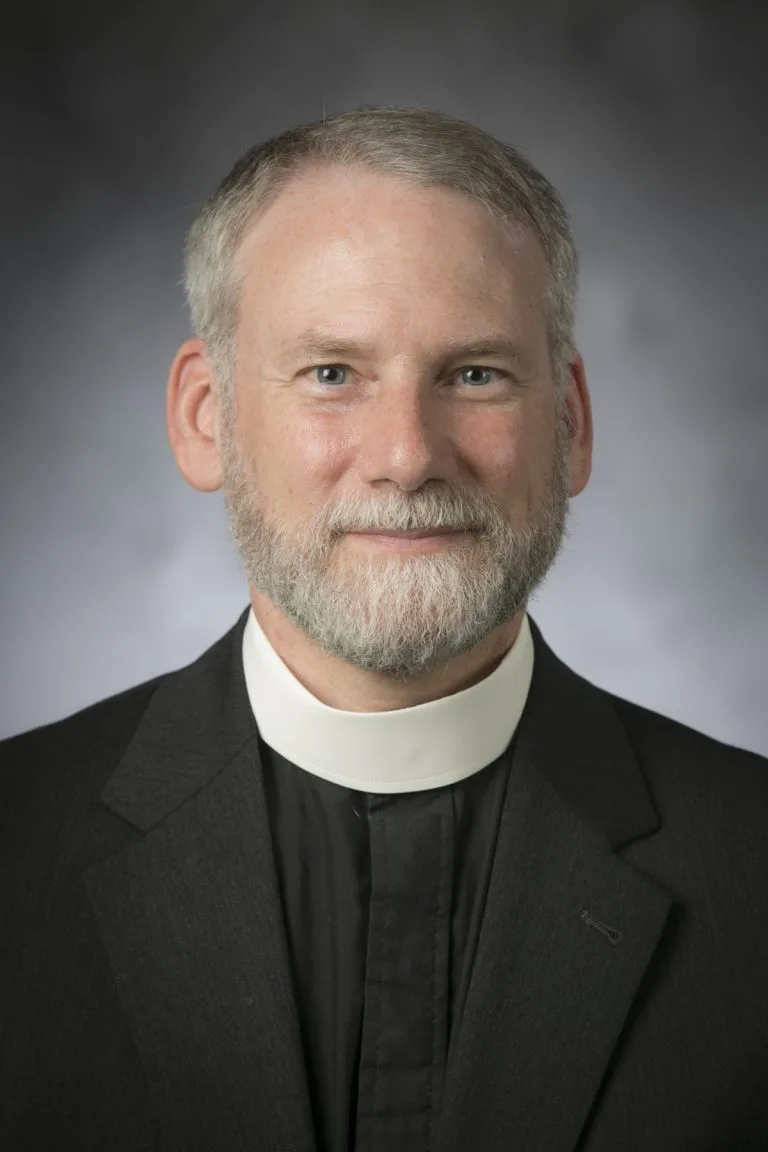
J. Warren Smith is Professor of Historical Theology and Director of the ThD Program at Duke Divinity School.
No comments yet



Leave a Reply