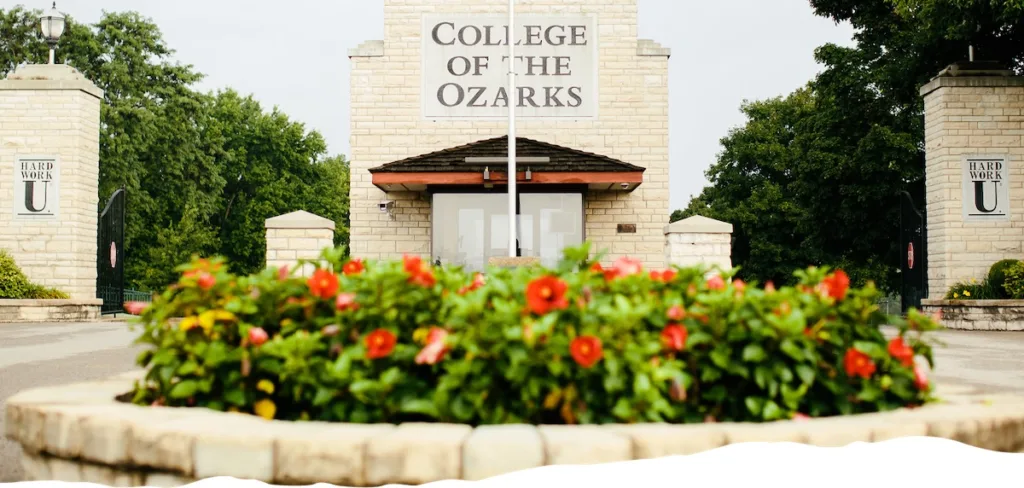
College of the Ozarks (C of O) is a private Christian college in Point Lookout, Missouri that specializes in providing low-income students a quality education intertwined with the development of strong work ethic. The college requires all students to work a part-time job of 15 hours per week during the academic year in exchange for a tuition-free education. A Christian higher education institution, C of O opposes the burgeoning transgender movement, including the push to allow transgender females to use the same accommodations as biological females. As a result, C of O offers dormitory housing that is separated by biological sex, not sexual identity.
In 2021, C of O ran into an obstacle threatening their ability to abide by their religious beliefs on biology and sex. President Biden issued Executive Order 13988 in January 2021, which aims to bar discrimination on the basis of sexual orientation in the realm of housing. The basis for this executive order comes from the Supreme Court’s decision in Bostock v. Clayton County, where a 6-3 majority held that Title VII of the 1964 Civil Rights Act prohibits discrimination on the basis of not just sex, but also sexual orientation. The Biden Administration promulgated Executive Order 13988 to extend the holding in Bostock to other federal laws that bar sex discrimination, chiefly the Fair Housing Act in the Civil Rights Act of 1968.
The legal dispute between President Biden and the College has stretched out over the last two years. C of O first filed suit in May 2021 to seek a temporary restraining order (TRO) against the President’s executive order. Presiding over the case in the United States District Court for the Western District of Missouri was Judge Roseann Ketchmark, who was appointed to the post by President Barack Obama. Ketchmark ruled against the C of O, finding that it lacked standing to bring the suit against the Biden Administration.
Citing the Eighth Circuit Court’s decision in Nelson v. Maples, Ketchmark held that “A district court does not have subject matter jurisdiction when a plaintiff lacks standing.” In other words, even if the district court wished to review the substantive arguments brought by the C of O, the court does not have the authority to do so if the plaintiff cannot prove it has adequate standing in the case. To prove standing, the plaintiff must show three things. First, it indeed suffered an injury. Second, said injury is fairly traceable to the defendants’ actions. Lastly, the plaintiff’s challenge is likely to be redressed by a favorable judicial decision (cf. Yeransian v. B. Riley FBR, Inc).
The district court held that the “Plaintiff has not sustained, and is not ‘in immediate danger of sustaining, a concrete and particularized harm that is actual or imminent, not conjectural or hypothetical.’” As such, Ketchmark inferred that the College failed the latter two prongs to determine standing. Without standing, the case was not subject to trial in a court of law and the College’s request for a TRO was denied.
Appealing to the Eighth Circuit Court of Appeals in July 2022, the College faced a similar result. The court, consisting of three Republican-appointed judges, ruled 2-1 against C of O. The Eighth Circuit issued a comparable decision to Ketchmark’s ruling, holding that the College did not have adequate standing to sue the Biden Administration. The majority opinion, written by Judge Steven Colloton, contended that the College misunderstood Biden’s executive order. The majority wrote that, “the Memorandum does not impose any restrictions on . . . entities subject to the Fair Housing Act. Rather, the Memorandum directs the Office of Fair Housing and Equal Opportunity to “accept for filing and investigate all complaints of sex discrimination, including discrimination because of gender identity or sexual orientation.”
Under the Circuit Court’s understanding, Biden’s executive order does not require the government to actively sniff out institutions that engage in sexual orientation-based discrimination, but to accept complaints of such discrimination. Thus, if no one attending the C of O complains against its housing policies, then the college is not necessarily subject to punishment from the federal government.
The College appealed once more, this time to the Supreme Court. On June 20, the Court released a list of cases that it will hear oral argument from and cases it will deny. The Court declined to hear the College’s appeal after the Eighth Circuit Court’s decision. As such, the two-year battle between the College of the Ozarks and the Biden Administration has concluded.
Still, the College is hopeful that its pushback against the Biden Administration bore fruit. The college’s president Brad Johnson stated, “We are committed to defending our religious liberty as a Christian college … This was not the outcome we were hoping for, but we do believe that our willingness to push back caused a reaffirmation and solidification of our Title IX exemption as a religious institution.”



Comment by David on June 27, 2023 at 1:25 pm
The solution of what to do with transgender persons is actually quite simple. If a person has male genitalia, they should use male or private facilities. Those with female genitalia should use female or private facilities.
Coed dorms are now very common at universities. This was most definitely not the case in my college days of the 1960s at a large state university. Not only were females restricted to their own dorms, but they were subject to a curfew. Those under 21 could not rent their own apartments off campus. Women were also required to have a higher GPA for admission to give males a better chance, but that was another issue.
The point of college is to prepare people for the “real world.” Exposure to places where men and women live in close proximity is part of that.
Comment by George on June 29, 2023 at 9:03 pm
Life once was so simple. You filled out your name, social security number, date of birth,
Sex, home address, next of kin, and a few other unremarkable notations. Today, it’s often questions that are totally unnecessary and borderline offensive to us normal people.
If someone is offended by my use of the term “normal people “, well good. I’m glad I could offend you. Because I’m over 65 and on Medicare, my doctor is required to ask me questions that are no one’s business. It’s the government always trying to get involved in our private lives. If it was not for our semi-conservative Supreme Court, there is no telling what the government might do to us. Either your male, female, or (bless your heart) a freak of nature. Did I offend anyone ?