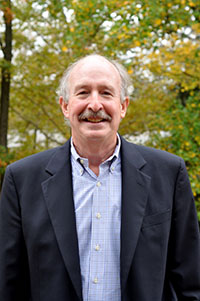
This week the Institute on Religion & Democracy celebrates our 40th anniversary with the annual Diane Knippers memorial lecture delivered by Dr. Dean Curry, former IRD board member and professor emeritus at Messiah University.
Diane Knippers Memorial Lecture
The Institute on Religion and Democracy
Washington, D.C.
October 5, 2021
Good evening. It is indeed an honor for me to be with you tonight to deliver this year’s Diane Knippers Memorial Lecture. And I am delighted that Ed [Knippers] is here to share this occasion.
My relationship with Diane went back to the early days of the IRD and through the years I remember her not only – in today’s lingua franca – as an influencer of major importance, but I also remember Diane as a wonderful human being. In reflecting on her life and life’s vocation, Alan Wisdom has said it well: “She set an example of faithful Christian witness: She was firm in her conviction of God’s truth, and that firmness enabled her to show a great serenity and warmth towards others.” She remains deeply missed.
Much of Diane’s life calling overlapped with the formation and maturation of the Institute on Religion and Democracy and she – as much, if not more – than anyone was responsible for its success. On this 40th anniversary of the IRD I would like to reflect back on seminal episodes in its history as well as remind us why the vision and mission set forth by the IRD’s founders, and those who have guided and served it since, remains as vital today as it was four decades ago.
As each of us know, throughout the past forty years the IRD has been accused by its critics of being a right-wing dupe. However, what is striking about the IRD’s founding is that so many of its founders had impeccable liberal, even left-wing credentials. The individual whose initiative gave birth to the IRD – David Jessup – was a high-level AFL-CIO official, a member of the Berkeley Free Speech movement while a 1960s Berkeley graduate student, and a member of the Social Democrats, USA. Penn Kemble, the IRD’s early organizational, financial, and leadership guru was also a socialist, a founding member of the Coalition for a Democratic Majority, and a speechwriter and advisor to Daniel Patrick Moynihan. (As an aside, for those of you looking for a writing project, there is a biography of Penn Kemble just waiting to be written!) And, of course, Richard John Neuhaus and Michael Novak established their liberal/left – even radical – bona fides in the 1960s and 1970s Civil Rights and Anti-Vietnam War peace movements. The IRD’s first dedicated staff researcher – Kerry Ptacek – was a university member of the Students for a Democratic Society. While I can’t say for certain, I suspect that there were more Democrat Party members among the IRD’s early board than Republicans. Founding board chair, Ed Robb, for example, was a conservative Democrat.
What united and brought together this diverse group of Christian educators and intellectuals was a shared understanding that the American democratic project was both a gift and a task, and this gift was in danger of being subverted with the help of some within the mainline American religious establishment. The April 1981 news release announcing the formation of the IRD stated that the organization was being founded “to promote democratic values within mainline Christian Churches.” This was necessary – the news release went to say – because of the “confusion in many of the [mainline] denominations, official agencies, and boards” which led to the funding and supporting of policy groups unsympathetic to democratic values.
However, from its founding day, the IRD’s foundational vision was not to be just another Washington-based political interest group. Indeed, the IRD’s mission was rooted in the twofold conviction that the witness of the Church was a necessary democratic anchor, and that the authentic witness of the Church was only possible when grounded in the dual affirmations that (1). Jesus Christ is Lord, and (2). the first political task of the church is to be the church.
Protecting the witness of the church, therefore, involved the IRD in the task of Church renewal. And while the IRD’s original focus on renewal was targeted at the Protestant mainline, the IRD’s mission was always an ecumenical one, embracing evangelicals as well as Catholics, as evidenced by the early presence on the IRD board of Carl F. H. Henry, George Weigel and Michael Novak.
Defending democracy and Church renewal were the centerpiece of the IRD’s founding mission. The IRD’s founders – and especially the influential trio of Neuhaus, Novak and Weigel – were confident that American churches had a key role to play in the defense of democracy against late 20th century totalitarianism. Richard Neuhaus, in the IRD’s founding statement – Christianity and Democracy – put it this way:
“Communal allegiance to Christ and his Kingdom is the indispensable check upon the pretensions of the modern state. Because Christ is Lord, Caesar is not Lord.
While our first allegiance is to the community of faith and its mission in the world, Christians do not withdraw from participation in other communities. To the contrary, we are called to be leaven and light in movements of cultural, political, and economic change. History is the arena in which Christians exercise their discipleship. Because our hope is eternal and transcendent, Christians can participate in society without despair or delusion.”
While the IRD’s mission was certainly shared by its founding board, there is evidence of at least some early strategic disagreements. One original board member, for example, left the board because he wanted the IRD to model a more irenic Christian witness while a majority of the board was comfortable with the IRD raising its voice in the public square.
My involvement with the Institute on Religion and Democracy began in the spring of 1983 after reading a Time magazine article describing the IRD-directed “counter-revolutionary civil war” with the “old-line liberal Protestant churches.” The previous couple of years had seen a transformation in my own political thinking and I was drawn to the IRD’s agenda as well as its David versus Goliath story. While established in 1981, it was a January 1983 Reader’s Digest article and subsequent 60 Minutes segment that brought the IRD to national prominence.
In March or April of 1983, I made contact with the IRD and invited Ed Robb to Messiah College, where I was a young professor, to give a luncheon presentation to a small group of faculty. I still have a clear recollection of that event and of welcoming Ed and meeting Diane, who accompanied Ed. A few weeks later, I re-connected with Diane in Pasadena, California at “The Church and Peacemaking in the Nuclear Age” Conference. This May 1983 conference was arguably a signal event in the political reawakening of American evangelicalism, and it was the beginning of my formal connection with the IRD. George Weigel and I were the same age and we had similar interests, so Diane arranged a meeting. I met up with George in his hotel room and we got acquainted over some good Mexican food, and I’m sure a couple of margaritas.
I spent a good part of the summer of 1983 living in Washington while working on my first book, an evangelical response to the 1983 American Catholic Bishops Pastoral Letter on war and peace. This book, too, was an outgrowth of the Pasadena conference. For me, the summer of 1983 was a time of establishing professional and personal relationships that have lasted through the present. And a good chunk of my free time during that summer was spent hanging out in the IRD offices with IRD staff.
Sometime between 1983 and 1986 I joined the IRD board of advisors.
As a contextual aside: The decade of the 1980s as well as the 1990s were exhilarating and satisfying years for those committed to mainline Protestant renewal, the revival of an American evangelical public witness, and the emergence of a Catholic-evangelical partnership.
Through the mid-1980s, the IRD did not have a president; rather, Penn Kemble was the organization’s de facto CEO. In 1986 Penn invited me to lunch and asked if I would be interested in being the IRD’s first president. I declined, but recommended Kent Hill for the position. At the time, Kent was a Seattle Pacific University history professor. Kent and I had gotten to know each other while working on the National Association of Evangelicals Peace, Freedom, and Security Studies program, yet another child of the 1983 Pasadena conference. Parenthetically, George Weigel – who by this time had joined the IRD board – was also a consultant to the NAE’s PFSS program.
Kent Hill was subsequently appointed IRD president and served in that role until 1992. His academic expertise in Russian affairs was well suited to addressing issues connected to the final years of Soviet Communism. Diane succeeded Kent as IRD president in 1993 and served until her passing in 2005. With the collapse of the Soviet Union and the end of the Cold War, Diane’s years as president became a time of adjustment and redefinition of the IRD’s mission. Diane’s passing in the spring of 2005 left a major leadership void as well as uncertainty in terms the IRD’s identity. The twenty-five years from the IRD’s founding until 2005 had seen dramatic changes in American religious and political life. To address these challenges, the full IRD board held a two-day retreat at the U.S. Postal Retreat Center in May of 2005 to discuss Diane’s replacement as well as the future direction of the IRD. Among other things, this deliberation resulted in the eventual appointment of Jim Tonkowich as IRD president in 2006. Following Jim’s three-year tenure, Mark Tooley, who had joined the IRD staff as United Methodist director in 1994, was named the IRD’s fourth (and current president) in 2009.
At the invitation of Diane, I transitioned from the board of advisors to the board of directors in the late-1990s and retired from the board in the spring of 2011. During that time, I served in numerous board capacities, including board chair. I will go out on a limb here and state that no non-profit board in America has had a more illustrious and capable board membership than the Institute on Religion and Democracy and this is a major factor in the IRD’s success. As a board member, and even before that, I considered it a great privilege to get to know and serve alongside individuals such as Richard Neuhaus, Michael Novak, George Weigel, David Stanley, Carl Henry, Tom Oden, Ira Gallaway, Mary Ellen Bork, John Boone, Helen Rhea Stumbo, Terry Schlossberg, Graham Smith, and many others, including, at my count, six members of the current IRD Board of Directors.
But the IRD’s success cannot be explained solely in terms of its presidential and board leadership. For forty years the IRD has employed an extraordinary and dedicated staff of remarkable men and women. Besides the current staff, this legacy includes Kerry Ptacek, Alan Wisdom, Faith McDonnell, Jerald Walz, Walter Kansteiner, Lonnie Smith, and Larry Adams, among others. The list of IRD interns has also been impressive and I will be shameless and mention just one, my former student Amy Sherman. Indeed, many of those associated with the IRD later moved into impressive careers elswhere. Walter Kansteiner, for example, served as an Assistant Secretary of State in the George W. Bush administration and Kent Hill held high level positions at World Vision, A.I.D., and the Templeton Foundation.
Looking back over the past forty years, the IRD has remained steadfast in engaging the vision of its original founders. Like all human enterprises, the IRD has encountered its share of bumps along the way; nevertheless, there can be no doubt that the IRD remains as vital and relevant in 2021 as it was in 1981.
Throughout its history, the IRD has encountered external developments that disrupted and required a recalibration of its mission. The first disruption, which I referenced in the context of Diane’s presidency, was the demise of Marxism-Leninism as a world historic force.
As the IRD enters its fifth decade it faces two contemporary disruptions. The first is the death of the renewal movements within the Mainline denominations (with the exception, of course, of the United Methodist Church which is headed toward schism.) Because of this, the IRD has become more generically evangelical focused in recent years. Unfortunately, there is on-going evidence that the boundaries of orthodoxy within American evangelicalism itself are becoming more and more porous. The question of whether American evangelicalism will remain the bearer of Christian orthodoxy in the coming years is an open one.
The second current disruption is the crisis of democracy associated with the national conversation about “the end of liberalism.” Recent years have seen those on both the right and the left attack the putative wreckage of liberal democracy whether manifested in inequality, human deviance, unrestrained state power, or any other number of cultural, political, and economic pathologies. In this regard just last Thursday the University of Virginia’s Center for Politics released a very sobering – and, frankly depressing – report that reveals just how precarious the state of American democracy has become. However, as George Weigel reminds us, “there is no plausible real-world alternative to the institutions of liberal democracy for those interested in a humane future.” Rather than “dynamiting liberalism” – to cite Barton Swaim’s memorable dramatic characterization – the project of democratic renewal requires, in Jenna Silber Storey’s words, the recovery of “the preconditions of liberalism’s success.”
The good news is that since its founding, the Institute on Religion and Democracy has been in the democracy and Christian renewal business and remains well positioned today to assist in the recovery of a democracy sustaining political and religious culture. The work of the IRD is needed as much today as it was in 1981, and under Mark Tooley’s leadership, and via its impressive array of publications and programs, the IRD is ready to meet the challenges of our particular historical moment.
Fifteen years ago, on the occasion of the twenty-fifth anniversary of the IRD, Richard Neuhaus described the IRD as “one small, but significant, Christian effort . . . to retell the American story relative to God’s providential purpose and most specifically to God’s creation of human beings wired for freedom.” The history of the IRD has always been a story of David versus Goliath, and we all know how that story turned out.
Thank you.



Comment by Rebecca Hammel on February 12, 2022 at 6:31 pm
I’m stunned. You have omitted a very important person in the founding of IRD, Maria Thomas, it’s first administrative director. She had long worked with Penn Kemble and Ben Wattenberg, at the Coalition for a Democratic Majority, without which there might never have been an IRD.