
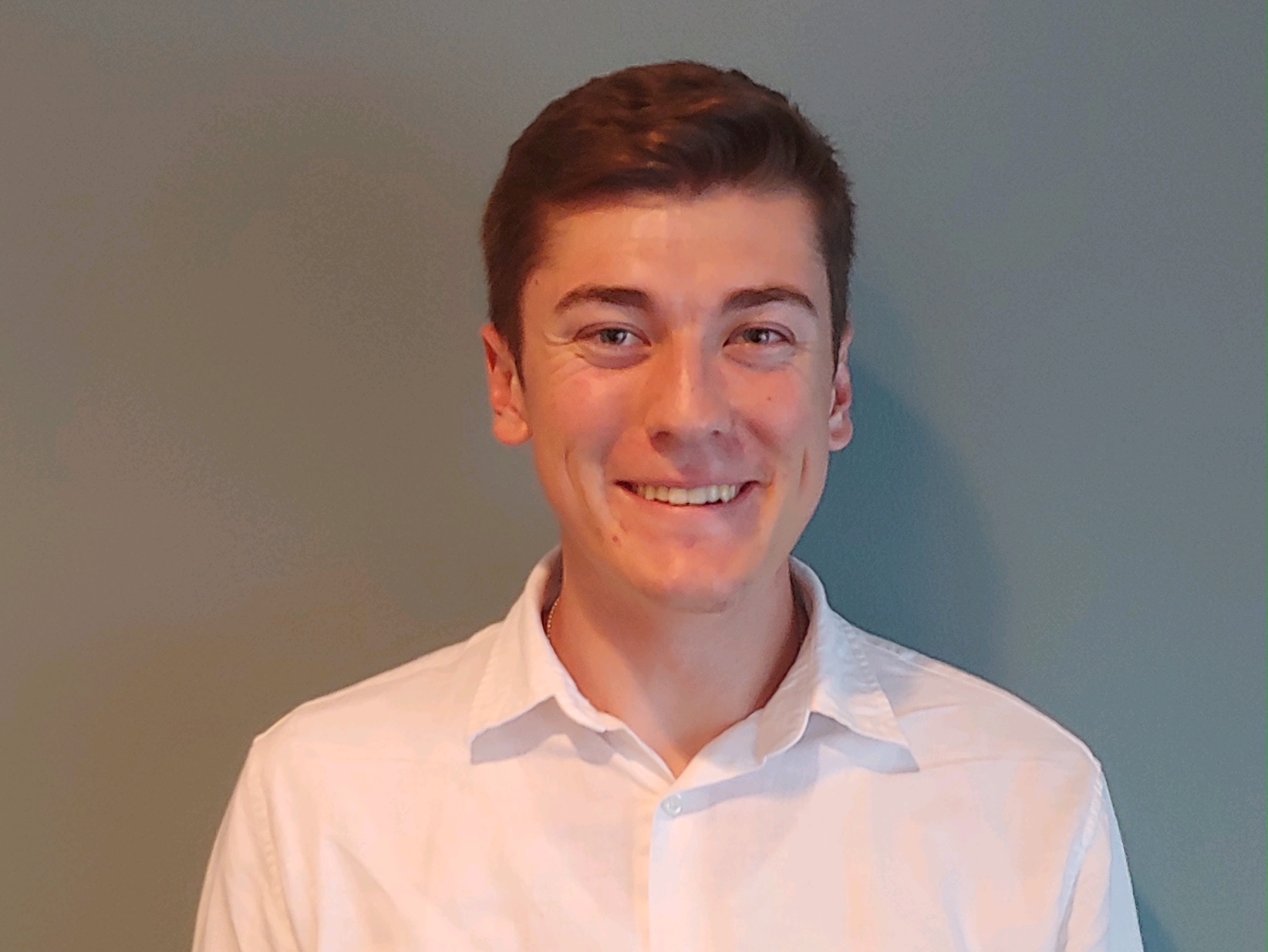
Recently, the Institute on Religion and Democracy (IRD) had the opportunity to sit down and chat with Pastor Aaron Graham, the founder and Lead Pastor of The District Church in Columbia Heights, and a graduate of Fuller Theological Seminary and Harvard’s Kennedy School. We spoke about his personal story, his experience as a church planter in D.C., and how God is working through churches in the city. A special thank you to Pastor Graham and his staff for taking the time to speak with IRD.
The interview has been lightly edited for clarity.
Elijah Martin: Why don’t we start with a little bit about yourself, your background, how you got into the ministry, how you ended up in D.C.
Pastor Graham: I’m the son of missionaries, grew up as a missionary kid in Liberia and then in Kuwait. We left Liberia in 1989 and lost all of our stuff because a civil war broke out that ravaged Liberia. We went to this tiny little country called Kuwait that no one had heard of at the time in 1990. Then Saddam Hussein invaded, and our family, we were held hostage during the Persian Gulf War when I was 10 years old. We were Southern Baptist missionaries in the country. We ended up miraculously being released — my mom, brother and I six weeks later and my dad four months later — and we ended up settling in Richmond, Virginia, which is where I went to middle school, high school, and then college at the University of Richmond.
I was called into ministry at 16 when I was on a mission trip in Belize, and always thought I would do international missions. I kind of felt like the church in America was asleep. It was shortly after, towards my senior year of college, that God began to break my heart for urban America, and I saw the needs here in the U.S. and was discipled by a couple inner city pastors. I ended up moving to Boston, where I met my wife Amy who was doing campus ministry at Holy Cross, which is similar to Georgetown, with Catholic roots at least. Then we ended up pastoring a church in Boston that we kind of unintentionally started. It was a primarily African-American church in a low-income neighborhood, and we did that for five years. She went to social work school, I went to public policy school. We ended up coming to D.C. and planted The District Church in our home 11 years ago.
Elijah: That’s incredible, being in Kuwait during the invasion. How did that experience shape your childhood in general and your faith specifically?
Pastor Graham: When I was 10 years old and the Iraqi troops had broken into our house and were harassing my mom, I was really afraid and I started crying and praying to God. I remember telling God that if He delivers me from this that I’ll serve Him with my life. I didn’t know what that meant really, at 10 years old, other than “Hey God, I’m yours, get me out of this thing,” the kind of the prayers of desperation that we’ll often pray when we’re back against the corner. But it wasn’t really until I was 16. I would just say a lot of my calling was shaped in international contexts, and I had a great sense, from a very early age, that A) there’s a lot of suffering and injustice in the world, and that B) our faith should make a difference in it. We should move towards suffering, not away from it. I began to wrestle. When you’ve lost all of your stuff in two wars at 10 years old, and you’ve had AK-47s to your back, you grow up quickly. I never felt at home in a suburban, predominantly white environment, and I think that’s what drew me to cities, they’re cross-cultural, and you feel at home in any culture in some ways. That’s how it shaped my calling and what interested me in going to public policy school, not as a step away from ministry but as a sense of saying “hey, our faith should impact the big issues of our time.” In God’s sovereignty, He knew that I would pastor a church in D.C. full of people doing public policy. It was a way for me to relate to the people that God sends to our church, that God sends to this city.
Elijah: God is always good at ordering our steps in that way. You mentioned you had planted a church in Boston, and how did the idea for The District Church start?
Pastor Graham: The church we pastored in Boston never grew beyond about 30 or 40 people. We never did a wedding in five years, only funerals, and it was because most of them were kids killed on the streets. We were doing a lot of youth ministry in the inner city. Amy and I were like, “what if we intentionally planted a church, what kind of church would we plant?” We began to dream about what it would look like. We didn’t have a lot of resources, a big sending church, we started in our home with about 10 people. Our only rule was that you can’t be going to church if you come to our church, which sounds good on paper but, if you’re going to plant a church, it’s usually great to have some committed Christians at the core who were active in church. We had to resist some early deconstruction that can happen among a young group of people who are so brilliant that they don’t go to church — because they’ve read all the books about what’s wrong with church — to actually form a group that says “rather than spending the rest of our life complaining about the church, we’re going to be the church, and we’re certainly not going to be a perfect church, we’re not going to have it all together, but at least we’ll be engaged in making disciples and doing that right here in this city.”
We were called Columbia Heights Neighborhood Church. A couple weeks later the youth at McFarland Middle School in Petworth, where one of our founding members went, was like “I’m not coming to anything with the name Columbia Heights on it, I’ve got beef with the kids in Columbia Heights.” We’re trying to be urban and neighborhood oriented, and already building walls instead of bridges with our name. So we ended up going with The District Church, that was God’s sovereign plan of helping us realize our vision to be bigger than just this neighborhood, but our strategy was to be neighborhood-based. Our vision is “impacting our city for Christ one neighborhood at a time.” We were a house church for the first six months before we launched into a school.
Elijah: When the Church started, the urban environment, you mentioned the challenges. What strategies did you use to draw people to TDC, or how did your strategy — your goals and outreach — compare to other church plants?
Graham: When I was at the Kennedy School of Government, I learned about community organizing. I studied the roots of the civil rights movement, Dr. [Martin Luther] King began to understand the moral underpinnings of what people long for. One of the questions they would ask in organizing is, when they met with people in the community, they would say “what is the lie most people believe here?” They would follow that with another question of “what do you believe is the spiritual solution to that lie?” In the civil rights movement, the lie that most people believe is that some lives are worth more than others, the color of their skin, that some people are just worth more. That’s the lie. The spiritual solution is that we’re all created in God’s image, that’s rooted in Scripture. It’s also rooted in the Constitution, that we have equal rights before God. That became the moral underpinning in the civil rights movement.
We adopted a similar strategy. I remember going to International Justice Mission one Saturday with about 40 people. We’d semi-launched publicly but we were doing it in phases, and we’d trained about 40 people in our church to have one-on-one meetings with people in the community to ask those questions. We had probably 200 one-on-one meetings, and one of the things we learned was that the lie most people believe is that you can change the world apart from community. That if you move to this city and you get a great degree, and work at the best organization or agency, and move your way up, then once you get to the top that’s where real change happens. This city is full of people who have worked their way up to the top, realizing that inside they’re spiritually empty, that maybe they’re not even as powerful as they think they are, even at the top of their field. That’s a lie that you can change the world apart from community. A deeper lie is that you can change the world apart from God. That’s the secular view right now, that politics can save us, material things can save us, or our sexual experience, whatever this thing that we’ve put our hope in.
That helped us begin to address one of the key idols of Washington D.C.: power. Money, sex, and power are the three idols that get in any culture, right? We’re vulnerable to all three in D.C., but certainly this city, the capital city not only of the U.S. but really of the world, I think wrestling with a lot of those principalities and powers. In beginning to identify those lies, like when Paul went into Athens in Acts 17, and began to study the culture of Athens, he began to see these false gods that people were worshiping, but he did it in a persuasive way saying, “You know what? You’re actually created to worship God and not these idols made of human hands.” That’s a longer answer, but I share that because we did take a relational approach to unmasking what is the cultural context of our city, so that like Paul, because he understood the context, he could then preach with spiritual authority because he knew the historical context better than some of the people that were even native to Athens. We tried to take that posture of humility, of learning and listening, and obviously listening to God and His Word first and foremost to influence our strategy.
Elijah: It’s a countercultural idea that you can make change from the foundation up rather than from the top down. You mentioned that The District Church’s core mission, or one of them, is to impact the surrounding community for Christ, especially through outreach ministries. Could you give readers a bit more on that mission specifically, and some of the outreach programs the church is involved in to do foundational, community based change?
Pastor Graham: In 2013 there was a foster care and adoption crisis in the city. The mayor’s staff came to our church asking us if we would help respond. We thought that we would do some type of canned food drive or charity type of thing, like “hey we’re in solidarity,” and the Lord kept pulling at our hearts. We ended up called to respond and take a lead in organizing other churches and respond to the foster care and adoption needs of the city. We felt God spoke to us from James 1:27, which says “true religion is to care for orphans and widows in their distress, to keep oneself unpolluted from the world.” We started this ministry called D.C. 1:27, and the dream was that there would be more families that are waiting to foster and adopt kids than there are kids on a waitlist waiting to be fostered and adopted. We’re now working with over 20 churches throughout D.C. with folks who are opening up their home to foster, to adopt, or to help keep kids out of foster care by doing short term rest and care placements to help before the family gets so vulnerable that the kids get removed. That’s been exciting: we’ve seen foster care and adoption roles go way down in D.C. and the church take a lead. That’s our dream, that social services wouldn’t become so professionalized in this city, but that the church would take a lead, as it has done throughout history, where church members sacrifice at great cost to themselves in order to proclaim the gospel and to offer radical hospitality and welcome to those who are overlooked.
The other ministry is Just Homes, which responds to the affordable housing crisis in the city. We started that because D.C. churches own more vacant land than any other group in the city other than the government. Many churches don’t know how to use their vacant land to renovate their existing sacred spaces, but secondly to help reach one of the most pressing needs which is just affordable housing in an increasingly expensive city. How do people who call D.C. home navigate that, and how can the church be part of that solution? We’ve written a book about it and are working with churches to help navigate what can be an incredibly complex process, an expensive process, but to be a neutral third party that has no profit motive to help come in and walk with developers, architects, church boards, to help address one of these problems. And to not just provide housing, which the government has incentive to do, but to actually create homes where people feel a part of the community.
We also have a counseling and recovery ministry. But our big heart is to start church-based justice ministries that meet a felt need in this city.
Elijah: What challenges do you face in connecting to the community, whether through general attendance or through your outreach programs, and have those changed since the church was founded?
Pastor Graham: Every church has its challenges in different stages and sizes. Some of the challenges we’ve faced unique to our church is the transience of the city. Our city attracts many young adults and students, the opportunity in that is to touch people’s lives even who don’t settle here. It’s a very international city. That can be lonely when you’ve been here a long time, because you can feel like, who’s still here that’s been a part of it from the beginning because many people have moved away. That’s not just our church, but something that the younger church plants share that reach people primarily in their 20s and 30s. It’s just not the stage of life where people are settling. The expense of D.C. makes it harder to build roots or to find physical space for gathering. We’ve faced those challenges and by God’s grace have overcome some.
D.C. is a progressive city, politically and worldview wise, and just as in a rural area where people have one view, in D.C. there’s one worldview. In some ways that makes things easier. Our church is fairly educated, most people have a masters degree or higher, so with COVID — at least in my experience — vaccinations haven’t been controversial. It’s like the people that developed the vaccine go to our church, and so people are not fighting that battle. Some of those things where churches dealt with polarization in their churches, we’ve had less in some ways. That makes it easier. But on the other side, it’s easy to fall into a worldview narrative and be in a bubble. D.C. is a bubble. It was revealed in how people responded to the election of Trump, or the Black Lives Matter movement, and you realize that people have very different experiences. America is diverse and it’s easy when you live here a long time to not understand that. That’s one of the challenges, to disciple people into a Biblical ethic rather than a primarily political party ethic which is strong in this city. There’s things that can be gospel truth on either political party platform, and things incomplete. Those are some of the things we struggle with. Thankfully, we can take the long haul view, the discipleship view, and not the campaign or electoral cycle view — which is what this city is based on — of getting short term political wins, and we can focus on how do we pastor people on both sides of the aisle to think longer term than just whatever’s hot on Capitol Hill right now or in the headlines.
Elijah: That leads into what I was going to ask about next: the political nature of the city. I’ve seen both sides, churches that have political flyers and campaigns and slogans on their church signs, to churches that seem like they are trying to stay as far away from the political sphere as possible. How have you tried to help The District Church find a balance between the political demographics within the congregation, and also reaching the outside community?
Pastor Graham: One of the challenges is if you don’t speak to the issues of the time, then you’re basically allowing culture to disciple people. The challenge in a local church is to not speak to issues in such politically predictive ways that you become an echo chamber. Depending on the words and the language you use, you end up signaling to one side or the other, the left or to the right, that you’re on their side. Then you alienate people who don’t feel like they fit within that construct. You actually defeat the whole purpose of making disciples over the long haul, and part of discipleship is being around people that share different worldviews. We’re coming together because we believe in the authority of Scripture, we’re committed to following Jesus, but our cultural experiences and our life experiences can be different. The early church brought Jews and Gentiles together and helped disciple them through power dynamics that existed in society [and] in church. It’s tricky, how do you speak to the issues of the time but not do it in a way that unnecessarily creates conflict? I do think there is a role for the church to be not just pastoral, but to be prophetic, and to speak truth even when it’s unpopular. But I find that a lot of pastors can major sometimes on the minors, and create a short term political win and then alienate people so they’re no longer in small group fellowship together, or they no longer feel at home in the church. You might have gotten social media on that, but where are the disciples in a year, five years, ten years later? How is the church community? The bottom line is that I’m choosing to play the long game. Administrations come and go from this city. If I just take our cues from that, then I think that I’m forsaking my call and I think the call of the local church, which is to make disciples who, as we define, are being transformed to love, think, and act like Jesus. Jesus was political, and in other ways He wasn’t political. It was a both-and, because His strategy, His Kingdom, was for this world, but not of this world. It wasn’t just reflecting the priorities of the Roman Empire or the Jewish people at the time, it was so much deeper. That’s the work of the local church, and it’s the long-haul work.
Elijah: You mentioned the progressive bubble in D.C. earlier, it seems to be around the world. Both large national church organizations all the way down to the local church are grappling with this progressive social narrative, issues like gender identity or abortion, life issues, racial issues. It seems to be really this tension between the church trying to welcome as many people as possible while also standing firm theologically. How have you tried to meet that intersection, and also bring the church through it as well, particularly being in such a progessive area?
Pastor Graham: I think it’s just doing the hard work of trying to teach people to think Biblically, and to increase Biblical literacy. Because we live in the social media age along with 24 hour news cycles, that many Christians today are more discipled by media commentators than they are by the Word of God. It becomes difficult for a pastor to speak to the issues in a way where it’s not already emotionally charged. I try to teach and preach the Bible, and allow the Bible to speak to the issues of the time. When I went through the Sermon on the Mount recently, I critiqued progressive Chrisitanity and Christian nationalism. What happened in our city on January 6th with the insurrection had its roots in Christian nationalism, where people don’t know where the American dream begins and Christianity ends. It’s just all one and the same, and it’s like Christianity is America and we have to create this top down. That’s dangerous, we have to preach against that. Likewise, there’s a movement deconstructing core theological doctrines that have been consensus doctrines for 2,000 years in the local church. In our quest to do good, to do justice, we’re forgetting fallen humanity, that the chief problem is fallen humanity and that’s shared across all groups of people. That’s what makes the gospel so great and so inclusive, is that we’re all fallen, and that God has given us a way to be reconciled to Him through Christ and through His death for us on the cross.
It’s easy to respond to whatever’s popping up here or there, important things and important current events, things that we should be engaged in, to forget our history and to forget the Bible. Biblical literacy and understanding the core Christian doctrines of the faith have become an increasing priority to me the longer that I’ve been here, because I’ve realized that I think secular culture is doing a better job of discipling urban Christians than the local church is. I’m having to be more intentional and aggressive about that, to say hey, let’s make sure the questions you’re asking around progressive Christianity, that progressive Christianity doesn’t become a layover to post-Christianity. That reading progessive Christianity becomes a place where you can wrestle with your doubts and come back to historic Christianity and a deeper sense, rather than “oh, this is just an exit for me to total deconstruction.” I talk about the difference between doubt and deconstruction, that doubt is a normal part of growth, asking questions, not just inheriting your parents faith, wrestling with these things, but active deconstruction is trying to tear down things where progressives have an agenda to then convert Christians to their agenda, just like Christian nationalists have the same thing.
Elijah: I remember that sermon, it was impactful to me because, being from a more Southern area of the country, it was new exposure to me for the challenges the church faces in an urban area. I’d be remiss if I didn’t mention the COVID-19 pandemic. How was the church able to adapt and persevere through the pandemic period?
Pastor Graham: One of the things we said often throughout the pandemic is that if the church was a building, COVID would have overcome it. If we were limited as the church, if the church was defined as having to have a building, meeting in person, but where two or three agree and gather under the Lordship of Christ. Our church is not unique, but we just adapted, and I think it was challenging. Our small groups were able to shift to Zoom and have grown and strengthened through that. Since we’ve been able to reopen outside in our Ministry Center tent, and now reopen in the school, it’s been a lot easier to reach newcomers. So while some of our existing members still haven’t come back in-person, largely for health reasons or just to be safe, if their kids aren’t vaccinated yet or other things, we’ve reached a lot of newcomers. That’s been exciting and fun. We’re now dealing with the challenge to maintain an online and in-person presence. In the midst of the full pandemic you can be all focused, all online with your staff, and then reopening it stretches staff a lot to be able to do both. We decided to keep pre-recording our services so that we could offer the same quality with worship and preaching. And then to do in-person hopefully as a draw, so people will want to come in person too. If it was the exact same experience because it was being streamed, I don’t think it would be as high quality, and maybe people would sleep in and not come and get involved. We’ve made a big push to help get people in small groups, to get people serving on a ministry team, because we’ve seen that people experience so much more community and more life when they feel like church is not just something you come to attend, but you’re helping set up or tear down, you’re in kids ministry, in hospitality. We’ve just seen a lot more discipleship fruit when the church is something. We can’t pull off church unless there’s a massive amount of volunteers.
It’s not just about what we’re doing, in setting up or tearing down, but what it’s forming in us as disciples. I think that’s been, for me, a blessing to be able to come back. We’ve followed the D.C. guidelines, we said we’re not going to fight against this. We’re trying to reach people who are far from God, who are unchurched, we don’t want to be known as trying to resist the guidelines. We’ve had a cooperative relationship with the government, the school that we meet in has been great, we have a great relationship with them, so as soon as they were allowed to have us we came back in. We make the best of what we have, and thankfully our Ministry Center has given us the opportunity to do a lot of different things in the meantime.
Elijah: Could you offer any encouragement to our readers as far as how God has been working through you, through the church, and also maybe offer anything that they can be praying for you about or for the church about?
Pastor Graham: Thank you. I think the encouragement would be for the readers to know that God is truly at work in the church in D.C. I shared the story of The District Church, but God is doing incredible things. We’re one of many churches preaching and teaching the Gospel, that are reaching out and doing the work of justice and racial justice in our city. I’m a part of several pastors groups, and the unity in the church in D.C. is incredible, across races, across D.C., Virginia, Maryland. People need to be encouraged, and I would ask people to pray for the church in D.C., pray for the pastors in this city. There’s an unprecedented amount of spiritual warfare that exists in this city, because, you know, strike the shepherd scatter the flock. The enemy has a strategy to go after pastors and to, whether it’s creating financial stress, marital stress, congregational stress, political stress, and to get them out of ministry, and D.C. is a place that we need to intentionally make disciples.
My heart and prayer is that we would be more known in D.C. as a place of spiritual renewal and revival than just the capital city or the political center. Imagine if people flocked to D.C., moved to D.C., because they were like wow, the church is alive, I want to go there because I want to be a part of the prayer meetings and the worship and the groups, and there’s just so many churches to choose from because the church is alive. That’s my heart. There’s been an incredible amount of great church planting in this city recently, God’s doing an amazing work. People need to know that, because for a lot of people, they read the news and D.C.’s news goes out to everyone else, and you can think that whatever’s happening at the White House or the Capitol is happening here. But there’s a deeper work that’s happening in D.C. that’s a lot more undercover and it’s playing the long game. And so I just ask you guys to not only pray for me and my wife Amy as we lead The District Church, but to pray for the other pastors by name. Just keep us at the top of your prayer list! When you come to the city, when you read the national news, when you see what’s going on in politics, just pray for the people who are discipling those politicians, and discipling their staff and the people who work in government and consult with government, because there really is important change that’s happening here, and we really need it to be Christ centered and founded on God’s work.
No comments yet



Leave a Reply