An Islamic professor and author at UCLA’s law school, in a column for the Australian Broadcasting Corporation, warns against the dangers of “assured salvation,” which he believes fuels both Islamist terror and support for U.S. and Israeli policies.
This “salvational cause amorality” is a “tendency by some to believe that regardless of their misconduct and misdeeds, their cause is sufficient to entitle them to absolution and ultimate salvation.” He continues:
Even if, as an act of grace, God promises salvation, ultimately this does nothing to restore the moral rectitude of a person. In theological terms, it is that moral rectitude, and only that, which reconciles a person to godliness and divinity and is thus a human’s true absolution.
Purportedly assured salvation justifies “ignoring ethical boundaries, and also to adopt a sense of moral entitlement towards depriving others of their life, dignity, or personhood.” Such “salvational causes” are not just religious but any cause that promises a “false sense of moral rectitude and ethical wellbeing.”
Although the professor is ostensibly inveighing primarily against a false religious security, he targets American anti-terror and pro-Israel policies, citing “targeted killings and drone attacks,” with “national security” means that are “grotesquely immoral.” He elaborates:
We witness this moral failure to be ethically vigilant every day in the United States as our government continues to assassinate and murder people around the world in what is commonly referred to as “dirty warfare.” Even worse, every single year the United States government kills hundreds of people in drone attacks that often go unreported and virtually unnoticed. Whether it is for patriotism, for fear of a repeat of 9/11, or some other cause, we absolve ourselves of moral responsibility while paradoxically continuing to see ourselves as ethically responsible and upright.
And otherwise “moral” persons suffer an “epistemic block” on “brutalization of the Palestinians” because Israel is a “salvational cause” for “some people.”
But the Islamic professor also cites ISIS atrocities, along with Iraqi soldiers “torturing” captured ISIS fighters. He explains:
Islamic State and similar puritanical organizations exhibit an extreme case of salvational amorality. Whether their cause is the Caliphate, addressing historical wrongs, or the glory of God, they have detached themselves from the impulse to think morally because they believe that regardless of their conduct, they have been absolved by God.
Such “salvational cause amorality, or failing to critically engage the ethical quality of one’s own actions because one assumes absolution and forgiveness by God, is antithetical to the Islamic message,” the professor insists. Commending “self-forgiveness” as “an essential ingredient of moral health,” he notes it requires “repentance.” And he adds:
Religious people who are convinced that they will earn God’s grace and go to heaven regardless of their treatment of others often become dangerous. Equally dangerous, however, are those who absolve themselves of responsibility because they believe that their cause is sufficient to earn them immunity from the moral consequences of their conduct.
Troublingly, the professor, while denouncing the “genocidal violence” of ISIS, refers to zealous support for Israel as a “more pervasive and equally troubling phenomenon.” He also seems to include U.S. anti-terror programs on the same moral plain as ISIS. That a person with this highly esoteric and morally obtuse perspective teaches at a prominent U.S. law school and likely is viewed as a Muslim “moderate” is hardly reassuring.
The professor’s conflation of assured salvation with “salvational cause amorality” is also problematic. Islamist terror is often motivated by the pursuit of paradise through martyrdom. The professor insists he’s not opposing Islamic “theology of martyrdom” but urging acceptance of “moral responsibility” by practitioners. His meaning is both disturbing and unclear. But the pursuit of salvation through homicide exemplifies not so much assured salvation but profound anxiety about the absence of salvation except by perpetuating some desperately horrific act.
Here let me speak from the stance of Methodism, which has always emphasized the availability of assured salvation. Methodists have many failures, but we’ve never been known for martyr-style suicide killings. As with the rest of Christianity, Methodism believes salvation, including forgiveness of sin, is a free gift offered to fallen humanity by God’s grace revealed through Jesus Christ on the cross. The assurance of salvation includes no carte blanche for vice much less terror. Instead, it entails a lifelong journey of repentance and growth in holiness.
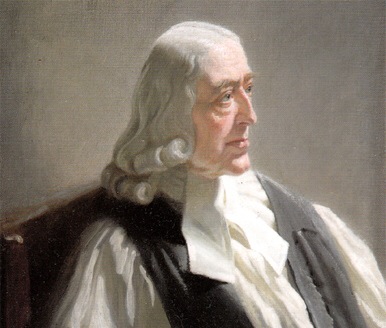
The UCLA professor’s attempt to broadly and sinisterly define assured salvation to include ISIS, friends of Israel, and U.S. anti-terror policies is theologically absurd and offensive morally and politically. He’s unlikely to accept John Wesley as a teacher for Islam. But maybe he will at least consider the possibility that violently radical Islam is rooted more in the hysterical absence of confidence in God’s love than in any genuine assurance of or quest for His presence and grace.



Comment by Guest on February 6, 2015 at 2:26 pm
“is rooted more in the hysterical absence of confidence in God’s love than in any genuine assurance of or quest for His presence and grace.”
– I couldn’t have written the truth any better. It’s amazing that the professional left will not hear an answer that actually reflects the nature of the religion and the evidence and utterances that are left behind by the perpetrators. Listen to the words that the killers were shouting as they hit the buildings.They do it precisely because they do not believe that they will be martyred or receive ‘heaven’ if they do not do it.
Comment by Pudentiana on February 7, 2015 at 10:35 am
Love. Such a simple yet powerful concept; so necessary for life yet so powerfully missed.
Comment by Supertx on February 8, 2015 at 11:01 am
His approach certainly seems right in line with the president’s words at the prayer breakfast.
Comment by HenryC on February 9, 2015 at 11:01 am
The last paragraph should be read at any discussion of Islam and Christianity. It was as well said as anything I have seen. It is how Christians of today are supposed to act.
Comment by Mark Brooks on February 9, 2015 at 2:19 pm
Precisely. The reason that you see Muslims becoming murderers in the name of Allah is because Islam provides no assurance of any kind of salvation. The Allah of Islam is irrational and changes his mind constantly, which was very convenient for the prophet of Islam and his immediate successors, who engaged in constant contradictions and revisions of the ‘rules’ even according to their own traditions. Not only that, but Islam provides no security as to the fate of the dead. The only guarantee is paradise for martyrs who die in jihad, i.e. the act of making war on non-Muslims. The Islamic professor in question is almost certainly either very ignorant regarding his own religion, or is engaging in deception — which is to say, he would be following the mandates of his religion in his conduct towards the kuffar (those who are not Muslims). I am inclined towards deception rather than ignorance in this case, given the thrust of the professor’s article.